Archive for the ‘Flora’ Category

Offering of enadangered Ran Dothalu by President stirs debate

May 15, 2025

https://www.sundaytimes.lk/250504/news/offering-of-enadangered-ran-dothalu-by-president-stirs-debate-597024.html Published in SundayTimes on 04.052025

A recent religious offering by President Anura Kumara Dissanayake has drawn sharp criticism from conservationists and botanists, reigniting concerns over the use of endangered plants in religious rituals.

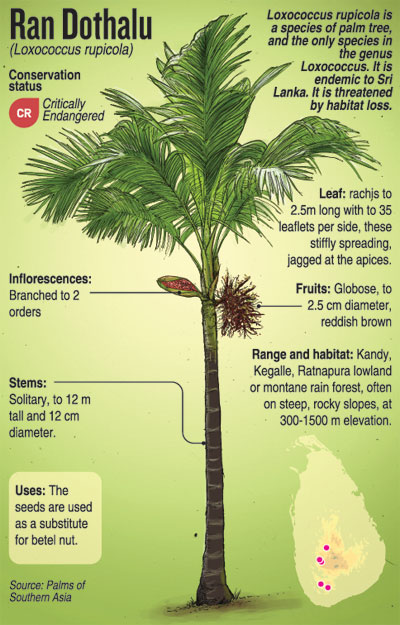
The controversy centres around the Ran Dothalu (Loxococcus rupicola), an endangered palm species, which was offered by the President during the Aluth Sahal Mangallaya— the traditional rice harvest ceremony — held on April 4 at the sacred Jaya Sri Maha Bodhi in Anuradhapura.
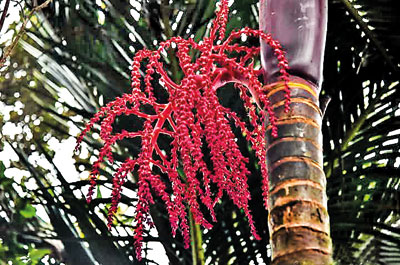
The Ran Dothalu flower

While the offering of Ran Dothalu would not have been the President’s idea as it was seen being handed to him by organisers, experts say it sets a dangerous precedent. “This endemic flower is endangered. When national leaders use it in public ceremonies, it inadvertently encourages illegal harvesting,” says Bhathiya Gopallawa, a botanist and conservationist.

This is not the first time Ran Dothalu has stirred controversy. A similar incident occurred in 2021 when then-president Gotabaya Rajapaksa offered it at a religious ceremony in Anuradhapura.

Although revered in Sri Lankan Buddhist tradition, especially through folklore linking it to divine offerings, Ran Dothalu had not been widely used in rituals until recent years. Today, however, it is increasingly seen at prominent pilgrimage sites like Adam’s Peak (Sri Pada), the Temple of the Tooth in Kandy, and the Ruwanweli Seya, despite its strict legal protection under the Fauna and Flora Protection Ordinance (FFPO), which prohibits the harvesting or possession of any part of this plant.

Traditionally, offerings of Ran Dothalu were largely confined to regions like Ratnapura, where the plant naturally grows. However, as its cultural popularity has surged over promotions in social media, the demand has risen, leading to unsustainable harvesting practices.

“Being a slender palm, the entire plant is often cut down just to collect its flowers. I’ve witnessed areas where dozens of these palms have been felled,”
said Mr Gopallawa.
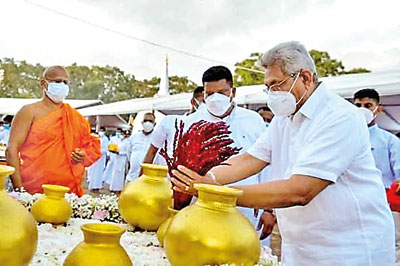
President Gotabaya Rajapaksa also offered it at a religious ceremony in Anuradhapura in 2021

Ran Dothalu is not just any plant — it is endemic to Sri Lanka, meaning it is found nowhere else in the world. Moreover, it belongs to a monotypic genus, meaning it is the only species within the genus Loxococcus. “If we lose this species, we lose the entire genus,” emphasised Prof. Siril Wijesundara, former director general of the Department of Botanical Gardens and currently a research professor at the National Institute of Fundamental Studies (NIFS).

Prof. Wijesundara also explained the scientific origin of the plant’s name ‘Rupicola’ comes from Latin — rupes meaning rock or cliff, and colere meaning to dwell. So, it translates to ‘rock-dweller,’ which reflects its preference for rocky habitats in places like Ratnapura.”

According to Buddhist folklore, the deity Sumana Saman is said to have offered Ran Dothalu to the Buddha when inviting him to Samanala Kanda (Adam’s Peak). This legend has further fuelled
the plant’s ritualistic use, especially during pilgrimages to Sri Pada.

In response to this growing trend, the volunteer group Samanala Kanda Rasika Ekamuthuwa (SKRE) has stepped up efforts to inform people.

“We often receive photos on our Facebook page showing Ran Dothalu offerings at Adam’s Peak. That’s when we realised the scale of the problem,” said Achintha Sri Lakmal, one of SKRE’s administrators.

SKRE has launched several awareness campaigns, including placing informational boards at the base of Sri Pada urging pilgrims to avoid using the flower. Their advocacy goes beyond awareness.

“We’ve filed three legal cases so far where evidence was clear, and each time the offenders were fined,” said Dasni Piyasiri, a lawyer and SKRE member. “Ran Dothaluis protected under the FFPO — even harvesting from your own garden is illegal.”

President Anura Kumara Dissanayake offering during the Ran Dothalu at the sahal mangallaya on April 14

One such case involved a family who picked the flower from their private garden.

“The law doesn’t allow removal of any part of this species, regardless of where it grows,” Ms Piyasiri explained. She added that social media images often serve as critical evidence. “Contrary to popular belief, these images are admissible. We’ve successfully defended their authenticity in court, setting important legal precedents.”

Following the recent presidential offering, SKRE has formally written to President Dissanayake, urging him to uphold environmental laws and issue a public apology.

“The President often says that anyone can make a mistake — but what matters is how you correct it. We also need clarity on how a protected plant ended up in his hands,” said Ms Piyasiri.

Amid the controversy, some have raised the idea of cultivating Ran Dothalu for ceremonial use. Prof. Wijesundara welcomes innovative approaches but stresses the importance of proper oversight. “Any cultivation initiative must be organised and supervised to ensure it does not further endanger the species,” he said.

However, many environmentalists fear that the wild harvesting would continue and that religious leaders should help stop this practice.
Pigeon orchid blooms adding fragrance to the grumpy moods

May 8, 2022

While the economic hardships, fuel shortages and power cuts add a gloomy undertone, nature however, looks to reconcile troubled minds adding fragrance to gardens in many areas through the blooming of pigeon orchids (Dendrobium crumenatum) this week.

Resembling the shape of a pigeon, this white orchid known as ‘parevi mal’ in Sinhala blooms in numbers clustered in an inflorescence emitting a very sweet fragrance. The speciality of this orchid is that all the mature plants in an area bloom simultaneously. Pigeon orchids in Southern Sri Lanka reportedly began blooming last Thursday, March 17 and in the Central province the previous week.

“Bloom of pigeon orchid is a response to the day and night temperature fluctuation where if it is more than 10 degrees celsius it could trigger flowering,” said former director of the Botanical Gardens, Botanist Dr. Siril Wijesunadara. This can happen usually after a heavy rainfall, where many areas in Sri Lanka receive rains after a drier period recently. According to some studies, the pigeon orchid blooms after 9 days of a heavy rainfall and as all the mature orchids in an area get exposed to similar conditions, the pigeon orchids in an area bloom together, Dr. Wijesundara told The Sunday Times.

In nature, such blooming in response to the temperature variance is common. Dr. Wijesundara recall that commercial florists in Netherlands take mature orchid plants into a green house which colder temperatures to stimulate the flowering. “As Sri Lanka has different climatic zones, commercial cultivators may use this to their advantage where plants raised in dry zone can take to the hill country to stimulate this temperature fluctuations,” Dr. Wijesundara said recalling at least a few such experiments carried out in Sri Lanka.    The Pigeon Orchid is an introduced exotic plant to Sri Lanka while it is native to India, Indochina, Taiwan, the Philippines, Singapore, Malaysia, Indonesia, New Guinea, and Christmas Island. This was a very popular garden plant decades ago, but they are not that common nowadays. These orchids used to be tied to a large tree such as coconut or mango with few coconut husks and the plant just grew without any special care. But the gardens continue to shrink where space for larger trees become limited, hence the pigeon orchids too may soon become a thing of the past.

Another similar exotic orchid that was very common decades ago was Vanda Miss Joaquim orchid 9 Papilionanthe teres) also known as the Singapore orchid, because it is the national flower of Singapore. This orchid with slender stems that should be tied to posts for support has now lost its popularity in Sri Lanka.

Published on SundayTimes on 20.03.2022 https://www.sundaytimes.lk/220320/news/pigeon-orchid-blooms-adding-fragrance-to-the-grumpy-moods-477183.html

Follow the butterfly: Rediscovery of ‘extinct’ plants highlights Sri Lanka’s new red list

October 18, 2021
  • The latest edition of Sri Lanka’s red list of native plants shows that nearly half of the assessed species are threatened with extinction, a higher number than in the previous edition from 2012.
  • There was some good news, however, with three of the five plants assessed as extinct in 2012 being rediscovered under serendipitous circumstances.
  • The number of critically endangered plants considered possibly extinct because they haven’t been seen in a century has gone down to 128 from 170, thanks in large part to sleuthing by amateur botanists and social media.
  • Much of the work compiling the red list was done by a group of young field botanists, who are riding a wave of enthusiasm among citizen scientists keen to study plants.

https://news.mongabay.com/2021/10/follow-the-butterfly-rediscovery-of-extinct-plants-highlights-sri-lankas-new-red-list/ Published on Mongabay 12.10.2021

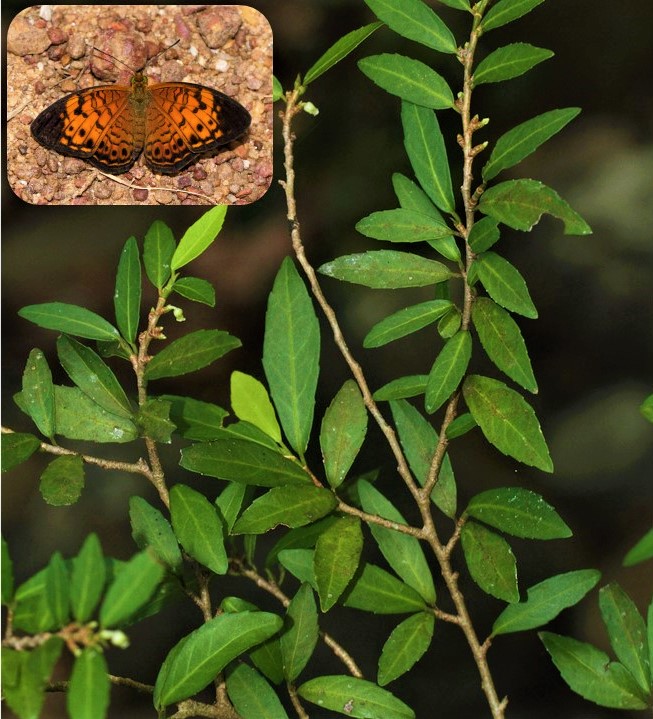
COLOMBO — Himesh Dilruwan Jayasinghe was on a butterfly chase in Sri Lanka’s Knuckles Mountains, in the Indian Ocean island’s central highlands. He’d tracked down a rare butterfly known as the small leopard, named after the markings on its wings, and was moving in for a closer look at the eggs it had laid in a host plant.

Suddenly he found himself transfixed. Not by the butterfly, or its eggs, but by the plant itself.

Here was a Rinorea decora plant, not seen since 1888, and categorized as extinct on Sri Lanka’s last red list of threatened plants, updated in 2012.

Jayasinghe’s discovery is one of many serendipitous revelations documented in the newly updated red list. (Though called the National Red List 2020, it was published this year.)

Recorded as extinct in 2012, Rinorea decora was rediscovered during a chase for a rare butterfly. Image courtesy of Himesh Jayasinghe.

The new red list revives three of the five plants declared extinct in the 2012 edition. Along with R. decora, they include R. bengalensis and Crudia zeylanica, all rediscovered by Jayasinghe himself. He found the latter two plants outside protected areas while conducting environmental impact assessments prior to the construction of roads.

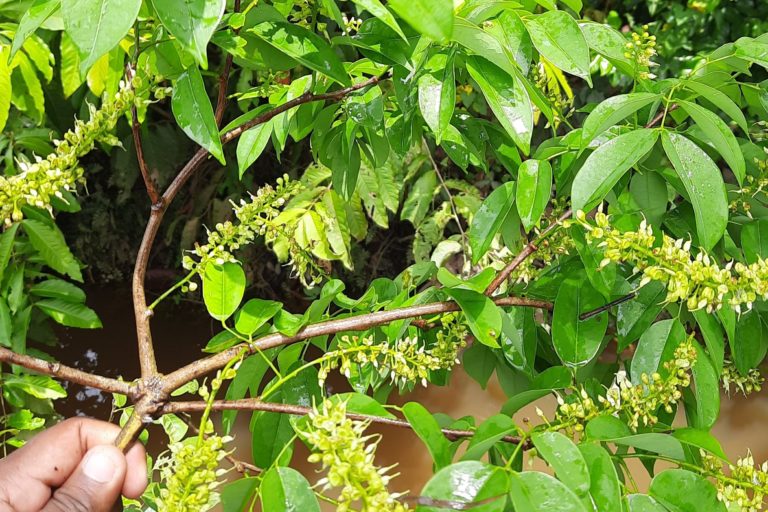
Shorea ovalifolia is a plant last seen in 1911 and listed as possibly extinct. It was rediscovered in 2019 when a plant enthusiast using a Facebook group alerted others. Image courtesy of Bhathiya Gopallawa/Lasitha Prageeth.

Rediscovering extinct plants

Plant conservation isn’t nearly as glamorous a field as conservation of wild animals. But for a change, the C. zeylanica rediscovery grabbed headlines in Sri Lankan media. Jayasinghe had identified a C. zeylanica tree in the Daraluwa area of western Sri Lanka in 2019, sitting along the designated path of a planned expressway. He went on to discover more C. zeylanica trees growing not far from that original one. The 2020 red list now categorizes C. zeylanica as critically endangered.

Jayasinghe found the third “extinct” plant, Rinorea bengalensis, under similar circumstances: while carrying out a survey for the planned construction of another expressway. The plant was growing near a stream in Ratnapura district in southwest Sri Lanka.

“The discovery of Crudia zeylanica and Rinorea bengalensis from populated areas not too far away from congested towns show that most botanical field surveys are restricted to protected areas. We end up missing out on some important plants that are scattered around and survive in disturbed habitats,” Jayasinghe told Mongabay.

The cover page of Sri Lanka’s National Red List 2020. The conservation status of threatened flora was published in 2021; the previous edition came out in 2012. Image courtesy of the Biodiversity Secretariat of Sri Lanka.

The 2012 red list also labeled 170 critically endangered plants as being “possibly extinct” because they hadn’t been seen in nearly a century. The new list whittles this number down to 128, thanks to a slew of new sightings in the past eight years.

“It is encouraging to find so many plant enthusiasts, and their presence helps make important rediscoveries,” said Bathiya Gopallawa, a field botanist at the National Herbarium Department of the National Botanical Gardens.

Gopallawa is a field researcher who uses social media to guides others to identify plants. The availability of reference books and instant communication via social media platforms can ensure timely expert assistance to amateur botanists in identifying plants and encouraging new enthusiasts, Gopallawa said.

“The rediscovery of Shorea ovalifolia, last seen in 1911 and considered ‘extinct in the wild,’ is an example of the importance of filed surveys everywhere,” Gopallawa told Mongabay.

Known as pini beraliya in the Sinhala language, the rediscovery of the plant generated ripples on social media. Plant enthusiast Lasitha Prageeth commented in an online group that a plant bearing such a name occurred in his village. Working together, the experts and amateurs got another “possibly extinct” species restored in status.

A number of additional C. zeylanica plants have also been found thanks to the collaboration made possible by social media, Gopallawa said. Other species, either considered extinct or having only one or two official records, such as Strobilanthes gardnerianaWrightia puberulaExacum pedunculatumHenckelia wijesundarae, were also found thanks to tips offered by plant enthusiasts using social media, Gopallawa said.

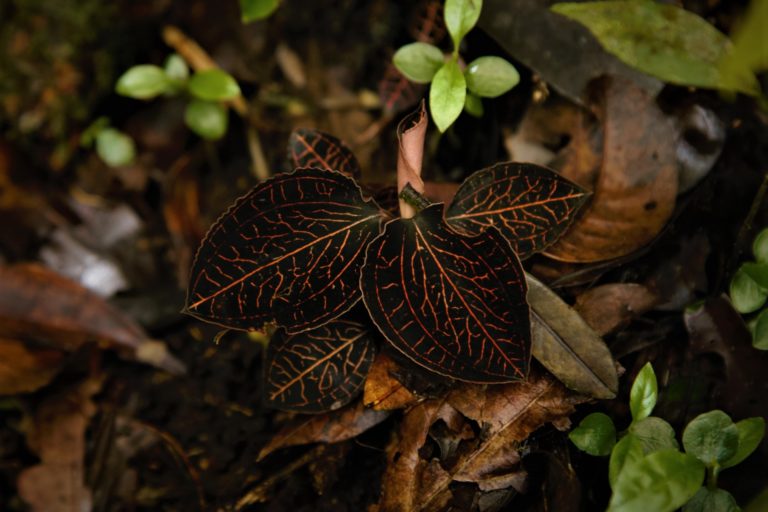
Anoectochilus regalis locally known as wana-raja, is an endemic terrestrial orchid species growing under shady trees among leaf litter inside Sri Lanka’s only rainforest. Image courtesy of Bhathiya Gopallawa.

Enthusiastic young botanists

“Much of the National Red List work is done by a group of young field botanists, and this augurs well for the country,” said Siril Wijesundara, who headed the expert committee behind the updated red list.

Wijesundara, a former director of the Department of the Botanical Gardens, said it’s also good to see communication tools being used to raise interest in plant studies among the average citizen.

But despite the rediscoveries and fresh sightings, the new red list indicates that threats to Sri Lanka’s plant life have gotten worse overall in the past eight years, Wijesundara told Mongabay.

The doll orchid (Habenaria crinifera) is also threatened due to extensive collection for the ornamental plant trade. Image courtesy of Bhathiya Gopallawa.

Of the 3,087 known flowering plants, or angiosperms, native to Sri Lanka, the 2020 red list assessed that 1,496, or nearly half, were threatened. A greater proportion of ferns, 207 out of 350 assessed, were considered threatened.

“This makes 48.4% of flowering plants and 59.1% of ferns threatened,” Wijesundara said. “According to the 2012 assessment, only 44% of flowering plants were threatened. So this is an increase of extinction risk and an alarming situation.”

See related: Biologists warn ‘extinction denial’ is the latest anti-science conspiracy theory

Found only at a single location in Sri Lanka, this endangered Exacum pallidum has beautiful flowers and was rediscovered by a plant enthusiast who shared information on a Facebook group. Image courtesy of Bhathiya Gopallawa.

The red list, he added, isn’t just an inventory of plant species and their status, but a powerful tool to inform conservation action and policy change. As such, it should be considered a health report for Sri Lanka’s flora, and, as with the results of a medical checkup, must be prescribed a solution that fits the conservation assessment, Wijesundara added.

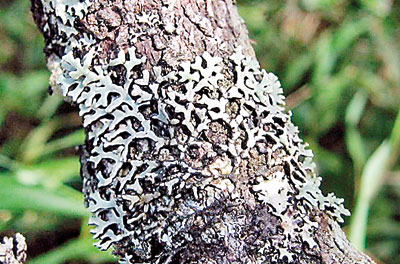
While the list focused on flowering plants, ferns, and gymnosperms (seed-producing plants), the publication includes vital checklists for mosses, lichens, algae and cyanobacteria, making it the most updated reference yet on the flora of Sri Lanka.

Crudia zeylanica was among the “extinct” plants that were rediscovered, triggering a huge debate about development that fails to consider environmental implications. Image courtesy of Bhathiya Gopallawa.

While the first international red list for plants was published in 1964 by the IUCN, the global conservation authority. Sri Lanka published its first National Red List in 1999, assessing 809 plant species. The 2007 red list evaluated 1,099 plants, while the 2012 edition assessed 3,100 flowering plants.

The National Red List was initially processed by the IUCN’s Sri Lanka country office, which this year handed the task over to the Biodiversity Secretariat of the Department of Environment.

Banner image of the critically endangered Thismia gardneriana, a plant that doesn’t create chlorophylls but instead survives on a symbiotic relationship with a type of fungi emerging from the forest floor. Image courtesy of Bhathiya Gopallawa.

Call to protect native beauties: alarm over declining Orchid populations

October 13, 2019

http://www.sundaytimes.lk/191013/news/alarm-over-decline-in-anuradhapura-orchid-population-call-to-protect-native-beauties-372890.html published on 13.10.2019

The Anuradhapura orchid – Vanda Tessellata — is Sri Lanka’s most heavily traded indigenous orchid species but over the past two decades its population has been on the decline, an expert has raised alarm.

A rare color variety of Anuradhapura Orchid (c) Samantha Gunasekera

Vanda Tessellata is an indigenous orchid species found in the dry and intermediate zones of Sri Lanka. As it has many colour variations, it is attractive and more prone to collection. Most of Sri Lanka’s orchids are spread in the wet and montane zones, but the Anuradhapura orchid grows in Sri Lanka’s dry zone and intermediate zone.“This orchid type is popular and their different colourations make them attractive. So, there is considerably a large demand for the flowers in the local and the export market. But the Vanda Tessellata population has heavily declined in the past 20 years due to the high demand and the lack of adequate conservation measures,” says the expert, Samantha Gunasekera, who was once the head of Sri Lanka Customs’ Biodiversity Protection Unit.

Like other orchids, the Anuradhapura orchid is also protected under the Fauna and Flora Protection Ordinance and included in the Vulnerable (VU) category on the National Red List. However, the law enforcement regarding the species is very poor, laments Mr. Gunasekera.

He revealed that although Customs had busted only attempts so far to smuggle the Vanda Tessellata plant out of the country, with one of the detections being made by the Forest Conservation Department. He said seven illegal local sale sites had been raided and two local suppliers of Vanda Tessellata had been identified through their surveys.

Mr. Gunasekera revealed these facts at an event organised by the Orchid Circle of Ceylon at the Sri Lanka Association for the Advancement of Science (SLAAS) auditorium last month to celebrate its 85th anniversary. Established in 1934, the Orchid Circle of Ceylon (OCC) is the oldest organisation of its kind in Sri Lanka and the second in the world after the American Orchid Society. The Circle has a prestigious past with the founder President of the Orchid Circle of Ceylon being none other than Sri Lanka’s first Prime Minister, D.S. Senanayake.

“Sri Lanka has lots of orchid lovers, so we revived the Orchid Circle of Ceylon to encourage more people to take the hobby right way. We are happy about the response we received for our society’s 85th Anniversary,” OCC secretary Dr. Uditha Herath said. The event was also associated with an orchid show that displayed some rare orchids.

The event’s Chief Guest, Prof. Surawit Wannakrairoj from Thailand, delivering a lecture on the fertilizer use in orchid cultivation, pointed out that in Sri Lanka the fertilizer usage was high. Orchid expert Ajantha Palihawadana delivered a speech on conservation of wild orchids.

Orchid Circle of Ceylon organized an orchid show last month

Sri Lanka is home to some 192 orchid species belonging to 78 categories and more than half of them are threatened according to the National Red List of Threatened Fauna and Flora of Sri Lanka 2012. Habitat loss remains the biggest issue for Orchid species with pollution, invasive species also contributing to their decline.

The direct exploitation where some of these orchids are fetched out from their habitat has been a bigger issue for a number of orchids, said Dr. Suranjan Fernando in the the 2012 National Red List publication. Those orchids commonly collected for their beautiful flowers include Phaius Wallichii (Star Orchid), Dendrobium Maccarthiae (Vesak Orchid), Rhynchostylis Retusa (Fox Tail), and Vanda Tessellata.

Habenaria Crinifera (Naarilatha), Ipsea Speciosa (Nagamaru Ala), Anoectochilus Spp (Wanaraja), Zeuxine spp (Iruraja) are removed from the wild for medicinal purposes and for various rituals associated with mythological beliefs, according to Dr.Fernando.

Many showy orchids like Vesak orchid (Dendrobium maccarthiae) are collected for their flowers (c) Bushana Kalhara


Tiny orchid with the name of a giant

June 30, 2019

Published on SundayTimes on 14.04.2019 http://www.sundaytimes.lk/190414/news/tiny-orchid-with-the-name-of-a-giant-345337.html

April is the month of flowers and there is no better time to announce that a newly-discovered orchid named Pteroceras dalaputtuwa in memory of the iconic tusker, Galgamuwa Dala Puttuwa, tragically killed for its tusks, has been added to the list of flowers endemic to Sri Lanka. The tiny Dalaputtuwa orchid is a partially opened flower about 10mm long and 5mm wide, with short, yellowish petals and an elongated rectangular-oval hollow extension called a spur. It was discovered in 2014 during a floristic survey and after periodic observations, researchers found that it flowers from late June to September.

The plant has long roots that can grow upto 14-22cm to attach themselves to tall forest trees, usually of the Dipterocarpus family (hora trees). Dalaputtuwa is believed to be restricted to Kudawa forest reserve in Ratnapura where researchers have found only about 20 plants. This puts it on the Critically Endangered list.

Although the Dalaputtuwa orchid closely resembles an orchid native to the Philippines, Sri Lankan researchers have, after thorough analysis, established it as an orchid unique and endemic to Sri Lanka. Their study has been published in the peer-reviewed botanical journal, Phytotaxa, with the authors’ names given as Tharaka Priyadarshana, Anusha Atthanagoda, Ishara Wijewardhane, Kawshalya Siriweera, Nimantha Aberathna, and Pankaj Kumar.

Earlier in their survey, the researchers discovered another new orchid species. This flower, named Oberonia meegaskumburae or fairy orchid, which was found in the Samanala Nature Reserve, along the Kuruwita-Erathna footpath.

Describing the Dalaputtuwa discovery, the researcher said, “This could be the first time in the history of plant nomenclature that a new species has been named after an elephant”. The tusker, Galgamuwa Dala Puttuwa, was killed by poachers in 2017 for its renowned long, entwined tusks.

Lead researcher Tharaka Priyadarshana said he and his colleagues chose the tusker’s name for the new orchid to attract wider public and government interest in improved conservation policies to protect
Sri Lanka’s biodiversity.

The new orchid’s generic name, Pteroceras, is derived from the Greek “pteron” and “keras”, which mean wing and horn respectively, referring to the two narrow and wing-like appendages at the base. This is a small group of orchids comprising 21 species in several countries. In Sri Lanka so far, only one species of Pteroceras is known, but  Pteroceras viridiflorum is also known mainly from drawings. As this orchid was not observed for the past 150 years, it was categorised as ‘Possibly Extinct’; however, recent floristic surveys conducted by the same researchers led to the rediscovery of Pteroceras viridiflorum.

Orchids form one of the largest flower families in Sri Lanka, with 191 known species, 58 of them endemic to the country.

They are threatened by habitat destruction and direct exploitation, with people collecting wild orchids for use as ornamental plants. Orchids are also sensitive to environmental changes such as moisture levels, so climate change and pollution also threaten their survival.

Brutal harvesting of gal siyambala treat leaves sour taste

September 2, 2018

With the gal siyambala season at its height experts are warning that unsustainable harvesting methods are pushing the fruit tree towards extinction while prices for the product have soared. Published on SundayTimes on http://www.sundaytimes.lk/180902/news/brutal-harvesting-of-gal-siyambala-treat-leaves-sour-taste-309655.html

Gal Siyambala tree laden with fruit (c) Ashan Geeganage 

With its velvet coat and sweetish acidic taste the gal siyambala or velvet tamarind has been a delicacy for generations.

The velvet tamarind tree (Dialium ovoideum) grows in evergreen monsoon forests and near rivers, especially in dry and semi-arid zones. It is not cultivated, so the fruit is harvested directly from the trees in the forests.

Increasingly, the harvesting is greedy and brutal, with little regard for conserving the health of the tree. Organised gangs from nearby villages go into the forest and chop down entire branches of the trees in order to pluck the fruit off them. It is common to find the remnants of these cut branches left under the trees.

Last week, 50g of gal siyambala fetched Rs. 80 at Dehiwala, with vendors lamenting that the fruit’s rarity increased the price.

Decades ago, gal siyambala could be found in large heaps at roadside fruit stalls and markets from August, when its season begins. Blooms appear on the trees from February to April and the fruits come on the market from August to November.

“At the end of August we visited a forest patch in Siyambalanduwa,” said Dr. Ashan Geeganage, who lives in Moneragala and has been lucky enough to taste the fruit directly from the tree.

“We found several gal siyambala trees, but only two of them had fruit. The fruits on the other trees had been plucked and some of the trees were chopped up very badly,” he said.

The head of the Department of Crop Science at the University of Peradeniya, Professor D K N G Pushpakumara, said this kind of harvesting was destructive and affected the fruiting of the following year’s crop.

Velvet tamarind trees are also cut down for the value of their timber as they can grow 30m high.

The species is now classified as “vulnerable” to extinction. The National Red List 2012 of Sri Lanka: Conservation Status of the Fauna and Flora, published by the Department of the Environment, lists 177 plants as “possible extinct” while a third of 3,154 species of Sri Lanka’s flora are listed as “threatened”.\

While the global IUCN status remain ‘Least Concern’; the tree had been pushed to ‘Vulnerable’ in National RedLIst 2012

Fading fortunes of the native Vesak flower

May 10, 2017

A species of orchid that blooms in May and commonly called Vesak mal is becoming rarer. Plant experts say habitat loss and over collection from the wild are causing its decline.

The Vesak orchid. Pix by Bushana Kalhara

Scientifically known as dendrobium maccarthiae, it may have got its local name because it blooms in the month of Vesak. It is a light violet-pink flower with a paler lip and a purple blotch in the centre. It is a larger variety of wild orchid. The flower is about 6 centimetres long and 7.5 cm across. The photos accompanying this article were captured by Bushana Kalhara from the Kukulugala forest patch in Ratnapura two years ago in late May. He says the flowers were on the canopy about six metres above ground.

A specialist on orchids, Dr Suranjan Fernando, says the flower grows in south western lowland forest patches in Ratnapura, Kegalle, Kalutara and Colombo districts. The core area of the distribution is northern and western parts of the Ratnapura and Kalutara districts. It is also found in the western parts of Kegalle, southern part of Colombo and northern part of Galle district.

“The reason that this orchid is not found in other parts of the lowland wet zone is still a mystery,” Dr Fernando says.

Like most of the other wild orchids, it is an epiphyte plant that grows harmlessly on tall trees getting moisture and nutrients from the air, rain, and sometimes from debris accumulating around it. The species usually grows in the upper parts of the tree trunks and large branches of mature trees.

It is a popular Sri Lankan flower and has been featured in stamps issued in 1950 and 1994. The orchid is also the provincial flower of Sabaragamuwa.

1950 stamp featuring Vesak Orchid

The former head of the Botanical Gardens, Dr Siril Wijesundara, reveals that there was a plan to use the Vesak orchid as a local alternative to the poppy to commemorate war heroes following the end of the war against Tamil terrorists in 2009.

It has caught the attention of collectors and exporters since the colonial days because it is endemic to Sri Lanka. Collecting the orchids from the wild for ornamental purposes led to its decline in the 1900s. This led to its listing as a protected species from 1937 with the inception of the Fauna and Flora Ordinance. Even the Forest Ordinance protects the Vesak orchid.

The former head of the Customs Biodiversity Unit, Samantha Gunasekara who is also an orchid lover says he once saw an ad on e-Bay that listed a plant for sale.

He was certain that it had been gathered from the wild.

Dr Fernando says field observations in the past 10 years have shown that the flower is in decline.

A number of other wild orchids are also threatened.

In Sri Lanka, orchidaceae is among the largest families in the country with 191 known species with 57 endemic species. Orchids grow in many habitat types in Sri Lanka, but highest number has been recorded in diverse ecosystems found in the wet zone.

According to the 2012 National Red List of Threatened Fauna and Flora, four orchid species are likely to be ‘possibly extinct’ as they have not been recorded for a considerable time. Sixteen species are ‘critically endangered’, threatened with becoming extinct, while 54 species are categorised as ‘endangered’. And 60 species fall into the ‘vulnerable’ category.

A number of showy orchids are also in demand. The Red List 2012 lists phaius wallichii (star orchid), rhynchostylis retusa (fox tail), and vanda tessellata are commonly collected by growers and flower enthusiasts. Habenaria crinifera (naarilatha), ipsea speciosa (nagamaru ala), anoectochilus spp. (wanaraja), zeuxine spp. (iruraja), are taken from the wild for medicinal purposes and because of various mythological beliefs associated with each species.

Published on SundayTimes on 07.05.2017 http://www.sundaytimes.lk/170507/news/fading-fortunes-of-the-native-vesak-flower-239451.html

Samanala reserve reveals new species

Another new orchid species was added to Sri Lanka’s Orchid Checklist a few weeks ago. It was found in the Adam’s Peak (Samanala) Nature Reserve in Kuruwita-Erathna foot path in the Ratnapura district.

The researchers Tharaka Priyadarshana and Ishara Wijewardhane say the orchid was first discovered on December 31, 2015, while they were conducting research with the National Wildlife Research and Training Center. Anusha Atthanagoda, Nandun Arangala, Asanka Jayasooriya and Pankaj Kumara too have been among those who supported this discovery according to a scientific paper.

The new orchid belongs to an orchid genus called oberonia that has about 200 known species globally. They are also called fairy orchids. The new orchid is named oberonia meegaskumburae to honor the senior researcher Dr Madhava Meegaskumbura of the Peradeniya University.

The new orchid

Real Sal blooms thrive despite the ‘cannon ball’

April 30, 2017

In full bloom: The real Sal flower at the botanical gardens, Peradeniya. Pic courtesy Peradeniya Gardens

The flower with pinkish fleshy petals and strong fragrance regarded as ‘sal’ is a favourite flower of the Buddhists. But they are not aware of its real identity.

While Vesak is only few days ahead, the real sal trees in Royal Botanical Gardens, Peradeniya are in bloom. According to botanical gardens sources, the trees start flowering in early April and still there are unopened buds on higher branches. So, it is likely they will be flowering closer to Vesak and you may still have a chance to witness the real sal, in the gardens.

‘Sal’ is sacred to Buddhists as legend has it that Prince Siddhartha was born in a garden of sal trees in Lumbini and His Parinirwanaya occurred in Kusinara again under sal trees. Vesak commemorates the Birth, Enlightenment (Buddhahood), and Death (Parinirvana) of the Gautama Buddha, so it is interesting that a flower associated with two notable events bear flowers closer to the period of Vesak.

However, the real sal is a small white flower that blooms in a tree scientifically called as shorea robusta. Though these flowers are smaller and has no fragrance, there is indeed some sacredness in its appearance.

But then what about the large pink flower with a strong fragrance that we commonly know as sal?

The pink flower blooms in the cannon ball tree (couroupita guianensis). While the real sal tree is native to India/Nepal, the imposter is native to South America according to botanists. The cannon ball tree bears large rounded fruit that resembles a ‘cannon ball’.

Dr Siril Wijesundara – botanist and the former director general of Botanical Gardens Department says that the first sal tree has been planted in the Royal Botanical Gardens in 1880, but sal trees had existed elsewhere in Sri Lanka before that. He recalls there are about seven sal trees in the gardens.

The real sal tree, shorea robusta, belongs to a family called dipterocarpaceae to which the ‘hora’ trees belong to. The sal tree can grow up to 35 metres and a girth of about 2 to 2.5 metres in about 100 years under favourable conditions according to botanists. Sal is also a popular timber tree in Asia. Like hora, the fruit of shorea robusta has tiny wings to assist its distribution in the wind.

The flower misidentified as sal, has pinkish fleshy petals and a strong fragrance. The large flower is about 6 centimetres wide and has a hood-like bulge which conceals a small white nodule in the centre of the flower that looks remarkably like a small stupa. Up in the hood, there are finger like structures, which some see as deities worshipping the stupa. So, the imposter tricks the unwary Buddhists to think it is the real sal flower. The tree doesn’t have any timber value.

Dr Wijesundara also pointed out that Buddhists in Thailand too regard the wrong flower as the sal flower. Tracing back the history of the misidentification, Dr Wijesundara pointed out that in 1901 King George VI planted a cannon ball tree in the Peradeniya gardens and it was identified as couroupita guianensis, meaning that this mistake was not detected. Dr Wijesundara recalls seeing a mural by S.P. Charles at Colombo Museum, which featured the wrong tree. So he believes the mistake could have occurred later.

More mistakes continued.

To mark the peace talks of 2002, the tree planted at Rose Garden Hotel by Anton Balasingham, and Professor G L Pieris, was also the wrong sal plant.

Even in movies portraying the life of the Buddha, the cannon ball tree has been seen.

Prof Namal Gunathilake – another veteran botanist, shares an incident where the mistaken identity of real Sal tree caused trouble. At an Ayurvedic conference, one research team that tested an Ayurvedic recipe reported that the combination of medicinal compounds doesn’t work. But when Prof Gunathilake queried about the compounds they used, it was revealed that they used the barks of the wrong tree.

Sunil Sarath Perera – a song writer and a pioneer environmental activist said that the sal tree is recorded in history.

A Sal tree planted by Nepali King in 1980s in Peradeniya Botanical Gardens

The Salalihini Sandeshaya which has been written during the Kotte era has referred to sal trees and the Dutch Thombu clearly mentioned ancient village names referring to sal. Mr Perera said that Salpita Korale where he was born is such a name and in Kirulapone villages such as ‘palle pattuwa’, the name refers to the location of sal trees.

Mr Perera has also seen the aesthetic side of sal forests in India. “In north India there are stretches of sal forests. With its ivory colour flowers and less undergrowth, the sal forests are tempting for anybody to rest under their shade. He says it is not surprising that Queen Mahamaya decided to rest in a sal forest. During his three-week stay in Jim Corbett National Park, Mr Perera had visited the jungle, riding on elephants in search of royal bengal tigers.

The Botanical Gardens Department in 2012 under the guidance of Dr Wijesundara distributed about 900 sal saplings to temples around Sri Lanka.

Meanwhile, the fragrant, beautiful cannon ball flower qualifies for religious offerings.

Published on SundayTimes on 30.04.2017 http://www.sundaytimes.lk/170430/news/real-sal-blooms-thrive-despite-the-cannon-ball-238746.html

Climate change affects sakura blooms   

In Japan, the blossoming season the sakura or cherry blossoms, is slowly coming to a close. The season starts in March and lasts until early May when cherry trees in different regions come into full bloom on different dates.

Having analysed the dates of these blooms in Kyoto in Japan since 800 AD, Japanese scientists have found that the sakura is blooming earlier. They worry that this is a result of global warming, where a warmer March stimulates the trees to bloom early.

A graph showing early full bloom of sakura based on historical data

Sakura bloomed in Nagoya, Japan (c) Makiko Yashiro

All in the family

May 28, 2014
Ajantha Palihawadana’s new Orchid varieties are named after his wife and children

Walking into his garden in early January to start watering his collection of orchids, breeder and researcher Ajantha Palihawadana noticed some flowers that looked different amidst the Dendrobiums. He quickly checked the plant tag and referred his hybridisation notes to realise that the flowering plant was a cross between Dendrobiumlineale and Dendrobium.shavinonwhite orchids.

Ajantha has selected the name Dendrobium Ganga rani for the new hybrid after his wife Ganga Rani Palihawadana in appreciation of her work in looking after his plant collection while he is out in the field.

Producing hybrid orchids, by crossing the orchids with pollen of other varieties to bring out new combinations has its own challenges, according to expert orchid breeders. Dendrobium is a huge genus of Orchids (Genus is a classification used to group one or more species that has common characteristics which is the taxonomic rank just above that of the species name) with over 1,600 species.
Ajantha recalls that he cross-pollinated Dendrobiumlineale and Dendrobiumshavionwhite in early 2003. Dendrobiumlineale is a species that grows along the north-eastern coast of New Guinea. Its inflorescences are up to 75 cm (30 in) long with many flowers- sometimes more than 60 flowers, which can bloom throughout the year. Dendrobiumshavionwhite is about six cm tall and 6.5 cm across, and has sepals and lateral petals which are white with light green veins. The column and lip are greenish white with slightly darker green veins.

“I was not sure what to expect; but I knew something valuable would come as the Dendrobiumlineale is a species with many flowers, a

Named after his son and daughter: Dendrobium Ganga rani var Kasun (left) and Dendrobium Ganga rani var Harini (right)

frequent flowering habit and tolerates more sunlight than other Dendrobiums. When the normal Dendrobium crosses flower for the first time they may produce three to four flowers, but the Dendrobium Ganga rani plant produced 24 flowers. I’m happy that what I dreamt of has come true,”Ajantha said Ajantha and his family found some of the other plants mature bringing more varieties of the new hybrid. Ajantha named them as Dendrobium Ganga rani var Kasun and Dendrobium Ganga rani var Harini after his son Anjana Kasun Palihawadana and his daughter Harini Yamani Palihawadana. “These two varieties are also equally promising since one of the parent plants has a prolific flowering habit so we can expect frequent flowering plants which could be a good attraction in the cut flower industry,” Ajantha added.

http://www.sundaytimes.lk/140427/plus/all-in-the-family-93568.html

Instead of Erabadu; Pink Trumpet unfolds petals for New Year

April 13, 2014

Erabudu is the flower of the Avurudu season but you will hardly be able to find erabadu these days. Instead, rosy trumpet (tabebuia) flowers bloom, marking the onset of the New Year season. (photos by Susantha Udagedara) 

This is the famous sakura flower season in Japan with thousands of cherry trees in full bloom. The cherry trees shed their leaves in winter and in spring become fully covered by white or pink blooms, making a spectacular show of nature.

In a similar spectacle, a pink flower started blooming in many parts of Sri Lanka two weeks ago — the blooms of the rosy trumpet, Tabebuia rosea, colloquially known as rabarosia.

Tabebuia usually blooms in February-March; but this time the trees were in full bloom in the last week of March, marking the onset of the Aluth Avurudda. The full bloom is over now, and the trees have fresh greenish tender leaves, but a few flowers can still be seen.
Tabebuia is native to South America and was brought to Sri Lanka as an exotic plant for the Royal Botanical Gardens in Peradeniya in the 1800s.

The Japanese plant sakura trees close to one another so that when they bloom they make a spectacular scene. Our urban planners can think about using the 30-foot tall tabebuia trees in a similar manner. Like sakura, the falling tabebuia flowers make a spectacular scene — the ground under the trees becomes pink with fallen flowers, making it a treat for the eyes. Street sweepers might not like it!
The recent sporadic rains brought flowers to ehela trees and some mara trees that start blooming as Avurudda approaches. But sadly, erabudu – the traditional sign of the season – seems to be vanishing.

Erabudu is the Indian coral tree (Erythrina variegate) and its bright red flower (inflorescence) that resembles a tiger claw blooms from February to April, coinciding with the Avurudu season. Erabudu trees have thorns and grow straight, making them a perfect hedge planting. But nowadays such fences have been replaced by parapet walls.

Sri Lanka gets 300 Sakura Plants 

Meanwhile the Japan Sakura Exchange Association donated 300 sakura plants to Sri Lanka at a small ceremony held at the Japanese Embassy recently. Japanese Ambassador Nobuhito Hobo said sakura flowers symbolised peace and the donation would strengthen the long-standing relationship between Japan and Sri Lanka. These sakura plants belong to a special cultivar called Prunus campanulata cultivar “Yoko”, suitable for planting above 1,500m. Some will be set in the grounds of the Hakgala Botanical Gardens.

Mr Wakisaka and the Ambassador Hobo showing a photo of the flowers of the Sakura plants gifted.

Mr Wakisaka and the Ambassador Hobo showing a photo of the flowers of the Sakura plants gifted.

Published on SundayTimes on 13.04.2014 http://www.sundaytimes.lk/140413/news/newcomer-unfolds-petals-for-new-year-92563.html

??????????????????????????????? ??????????????????????????????? ??????????????????????????????? ??????????????????????????????? ???????????????????????????????

Off to Kumamoto to see Japan’s famed cherry blossoms

April 11, 2014

“The Sakura flower is extremely beautiful, but its splendour does not last long. A few days after blossoming, the flower starts to disintegrate, reminding us of the uncertainty of life,” said Nobuko, my Japanese colleague explaining how the Japanese view the cherry blossom season.

The Sakura’s bloom marks the arrival of spring, as the trees bloom only when climatic conditions are right. Missing them in Tokyo, I was lucky to see them in Kumamoto city at the heart of Japan’s southernmost island Kyushu.

Kumamoto is roughly about 40 minutes by domestic flight (six hours from Tokyo by train). Signs of Sakura could be seen as soon as we exited the airport.

Literature says cherry blossom is the flower of any of several trees of genus Prunus, particularly the Japanese Cherry, Prunusserrulata. As my Japanese colleague explained, there are many varieties of Sakura flowers ranging from pink to white. However, white is the most popular Sakura flower among the Japanese. When over 80% of Sakura flowers open up, it is called a ‘Full Bloom’ and the Japanese go out to picnic in parks to enjoy the dawn of spring. The trees in Kumamoto were a few days prior to a full bloom, but were already infested by a swarm of white butterflies. The Sakura trees line the main roads, making it a beautiful sight. Some of the tree branches are bandaged with medicines to prevent them becoming infected with disease – a reminder of how well the Japanese look after these trees.
Kumamoto though offers more than the Sakura. Tasting the cleanest water directly from the source was another experience, the city being famous for its groundwater springs. There are a few hot water springs too in the vicinity and the tour also took us to visit one of the largest active volcanos in the world.

Passing barren mountains that had traces of crystalized lava, we moved toward Mount Aso located about 30 miles away from the city. Disappointing and scary news reached us while on the way that due to high volcanic activity, the public would not be allowed to go to the crater but things had settled by the time we reached there and we were allowed to climb all the way up.

Though having seen many documentaries about volcanoes, I never thought it would be so scary to look at one up close. The volcano was emitting gushing whitish fumes with fury from the heated volcanic lava, the sound captured by the ears more frightening than what has been seen by the eyes. The scent of sulfur was everywhere and announcements were constantly made that asthma sufferers should not go closer.

A tour to Kumamoto is not complete without visiting its most symbolic historic monument; the Kumamoto castle, incidentally the location for the Tom Cruise movie ‘The Last Samurai’. The movie is based on the historic events of the Satsuma Rebellion that took place in 1877 and the final battle between Samurai warriors and the empire’s troops that took place in Kumamoto. Dating back to the 1600s, the Kumamoto Castle is considered a most impregnable fortress with singular features such as its curved stone walls called mushagaeshi and its wooden overhangs, originally designed as protection against the ninja, together with its black and white main towers according to the guides.

Today, Kumamoto Castle also houses a museum which contains palanquins, samurai armour, Japanese swords and other artefacts from the Kato and Hosokawa clans, as well as detailed information on the castle’s remarkable history. It is also an excellent site for cherry blossom viewing,
The friendly people are the most valuable asset of Kumamoto. If you are lost, most would not hesitate to come along to show you the way. I even found a Sri Lankan restaurant in Kumamoto!

Published on SundayTimes http://www.sundaytimes.lk/140406/plus/off-to-kumamoto-to-see-japans-famed-cherry-blossoms-91446.html Photo credit for Cherry Blossoms in ‘Full Bloom’ Chunli Yang.

?????????? ?????????? ?????????? Sakura bloom at Kumamoto Castle (c) Chunli Yang 2014 ??????????????????????????????? DSC_0010


Large haul of Red Sandalwood seized by Customs

November 24, 2013

Red Sanders 22Nov2013. 6iA large haul of Red Sandalwood (rath handun – රත් හදුන්) shipment has been seized by Sri Lanka customs this week. Based on a tip received by customs, the container which has been declared as sanitary items has been opened on Friday 22nd of November by customs officers. Instead of sanitary items, the shipment contained contained 4.5 metric tons of Red Sandalwood which is valued for about 100 million rupees.

The sandlewood shipment has been originated from a port of Chennai in India and en-route to Dubai which is a hub of red sandalwood smuggling. Talking to SundayTimes about this seizer, Samantha Gunasekera – the chief preventive officer of Sri Lanka customs said that this the shipment contained the best quality matured red sandalwood. Mr.Gunasekara recalls stopping about 4 shipments of Red Sandlewoods during last few years, revealing that this is the largest such shipment seized in Sri Lanka so far.

Red Sandlewood scientifically categorized as is a tree native to India. Its wood is having a fragrance and popular for its medicinal values. Red Sandalwood timber is also being used making of expensive furniture, natural dyes, natural colorations or perfume; hence received a high demand which pushed the tree to the brink of extinction where it has now become an ‘Endangered’. Cutting Red Sandalwood is banned in India, and the Convention of International Trade of Endangered Species (CITES) has restricted its legal international trade. So it is feared that the racketeers are trying to exploit Sri Lankan ports as transit point for illegal wildlife trade. However, thank to amendment of law, the Customs officers can now even seize goods in transit, according to Mr.Gunasekara.

Red Sandalwood doesn’t grow naturally in the wilds of Sri Lanka and only few trees introduced from India are present in few places. However, the White Sandalwood (Santalum album – සුදු හදුන්) that grows in Sri Lanka has been heavily exploited. The White Sandalwood has become a protected tree in 2009 and now it is illegal to cut. But as SundayTimes reported earlier this month, the instances where White Sandalwood smuggling has increased, despite the ban making it illegal. It is claim that the Sandalwood trees in gardens are been cut illegally at night by these racketeers. The customs Biodiversity Protection unit has also thwarted several attempts the white Sandalwood products are being smuggled out of the country.

The Sri Lanka customs are conducting further investigations regarding the seized Red Sandalwood, said customs spokesperson.

Weni wel the local paracetamol in market hot water

March 10, 2013

Forest officials and experts have expressed serious concern over illegal and unchecked harvesting of weni wel, Sri Lanka’s age-old multi-cure herb, by racketeers and profiteers driven by the high demand for it. �Recently, forest officers in Thawalama arrested four people who were transporting without a permit some 700 kg of weni wel. Thawalama forest officer Sunil Kaluthotage said the suspects pleaded guilty when they were produced before a magistrate.

Prematurely harvested weni wel stems being dried.

The case was the latest addition to the series of detections made in the area. �Mr. Kaluthotage said that during the past 12 months, at least six illegal ‘weni wel’ cases were reported from his range alone and this showed that haphazard harvesting was on the rise to meet the demand for weni wel in the market.�Locally known as weni wel, weniwelgata or ban wel, the plant has Ayurvedic medicinal properties. Described as the Ayurvedic equivalent of paracetamol, weni wel is a much sought after herbal cure for ailments ranging from common flu to tetanus. It is a key ingredient in the famous Pas Panguwa.

Known as ‘False Calumba’ in English and coscinium fenestratum scientifically, weni wel is a woody climber commonly found in Sri Lanka’s lowland wet forests such as Sinharaja and Kanneliya. The plant is also native to South India, Cambodia and West Malaysia. �But unchecked harvesting of weni wel, which takes decades to reach maturity, has raised alarm among experts. They say that some plants take 30 years to mature to the level which gives it a ‘geta’ or knotty appearance – a sign that indicates that it was of best quality.

The herb is also used in a range of commercial products including soap, creating a big demand for it. �Prof. Nimal Gunatilleke, an expert on forests, said he believed that the demand for it in the market had led to unchecked and premature harvesting of weni wel.�“While we can be happy that a traditional herbal product has found new and emerging markets both locally and overseas, can the resource base cope with the current and projected demand?” he asked, stressing the need for a thorough research to find the right balance.

“As biology researchers of both timber and non-timber forest products, we realised this need several decades ago. We have been studying the weni wel’s biology and ecology as well as its propagation and cultivation in a number of habitats with a view to reducing the extractive pressure on the wild populations,” he said.

Prof. Nimal Gunatilleke warned that if this current level of extraction was permitted, weni wel would soon, if not already, be on the list of threatened plants of Sri Lanka.
The eminent botany professor said he had seen large stocks of dried weni wel stems along the Kukule-Molkawa road, ready for transport. He said the people had told him that they had paid for their permits to harvest them.

Prof. Gunatilleke said that since weni wel grew better in partial light and was commonly found in degraded forests and forest edges, the plant could be grown in pine forests in the wet zone and in home gardens. He said the weni-wel plants that were planted at the edge of Sinharaja on experimental basis reached harvestable level within 15 years or so with no fertiliser added, though the quality would have been better if the harvest had been done much later.

A common sight along the Kukule-Molkawa road

The professor welcomed a recent suggestion by Economic Development Minister Basil Rajapaksa to set up a forest in every village.�“This concept of ‘one forest for one village’ would be an excellent proposition in managing local ecosystems while providing benefit to the local people. At the same time, it would also be worthwhile to consider how the existing pine plantations could be converted into forests of native plants, both timber and non-timber species,” he said adding that this would help enhance biological diversity and ensure environmental security.

“On our part, we have shown that this could be done in the lowland wet zone using suites of such species of ecological and rural economic importance in Sinharaja and Hantana demonstration plots. More such studies are needed, if we are to conserve and utilise our rich biological heritage, bringing in tangible benefit to the local communities,” Prof. Gunatilleke said.

Published on SundayTimes on 13.03.2013 http://www.sundaytimes.lk/130310/news/weni-wel-the-local-paracetamol-in-market-hot-water-36197.html

Environmentalists not in favour of breeding rare fish for export

January 25, 2013

Environment watchers are angered by plans to legalise the breeding of rare fish and the cultivation of rare water plants for export. They say the Ministry of Economic Development, the Department of Wildlife Conservation (DWC) and other government agencies are working together to amend the relevant laws – by Malaka Rodrigo

Malpulutta. Courtesy Galle Wildlife Conservation Society

The export proposal covers eight endemic freshwater fish and 13 endemic water plants. Six of the named fish are “critically endangered” and the other two are “endangered”, according to the 2012 National Red List for Sri Lanka. The Red List is an international classification of the world’s threatened animal and plant species. The water plants include two varieties of “kekatiya” (Aponogeton), seven varieties of “ketala” (Laginandra), and four water plants known as “athi udayan” (Cryptocoryne).

The Wildlife Conservation Society of Galle (WCSG), which has conducted an islandwide survey on freshwater fish, says these fish are too rare to be subjected to a breeding programme. In 2009 and 2012, the society visited areas where, according to previous surveys, the rare fish could be found. A fresh survey noted that most of these rare fish species were not to be found at most of these sites.

Environment lawyer Jagath Gunawardane fears that the export plan could set a risky precedent. Allowing the legal breeding and export of these rare fish could encourage profiteers to hunt for these same fish in the wild.

But the Live Tropical Fish Exporters Association of Sri Lanka says the breeding and export of these rare fish would overall boost lucrative freshwater fish exports from Sri Lanka. At a recent press conference, the association pointed out that Sri Lanka is the loser after restrictions on the breeding of endemic species had led to rare fish being smuggled out of the country and bred elsewhere for profit.

Freshwater fish authority Samantha Gunasekara sees no problem in breeding rare fish, so long as it is done properly and scientifically, and is closely monitored. Mr. Gunasekara, who works for the Customs’ Biodiversity Protection Unit, says that many endemic fish that have completely disappeared from Sri Lanka are being bred in other countries.

The government has appointed a committee to oversee the fish breeding programme. It includes the Department of Wildlife Conservation; the Forest Department; the National Aquatic Research Agency (NARA); the Botanic Gardens Department, and Sri Lanka Customs.Wildlife Conservation Society of Galle president Madura de Silva said fish breeding exercises tended to produce “less colourful” fish than the same species caught in the wild. He feared that exporters would prefer fish caught in the wild.

According to the 2012 National Red List on Conservation Status, one in two species of Sri Lanka’s 91 freshwater fish species risk going extinct in the wild. The most vulnerable freshwater fish are found in streams lying outside the Protected Area Network. These streams are prone to pollution and habitat loss.

Published on SundayTimes on 20.01.2013 http://www.sundaytimes.lk/130120/news/environmentalists-not-in-favour-of-breeding-rare-fish-for-export-29356.html

Painting with colours hidden in nature

January 12, 2013

The SHILPA 2012 – National Handicrafts Exhibition that was held at the end of 2012 had many interesting exhibits on display but this artist’s work merited closer attention from visitors due to its unique and innovative method of creations. Made using only wood- a collage of wooden chips and scraps, the works on show were eyecatching in their intricate composition.

“I have used wood scraps, wood chips and their dust to create this artwork,” the artist Udayanga Weerasinghe explained. “These are scraped using the normal ‘yathukete’ to get delicate wood scraps and wood chips. Using a ‘welikadadasiya’ (sand paper), I get the wood dust of different colouration which is then mixed with glue for this artwork,” he said.

The works are full of colour but Udayanga says these are all the natural colours of wood. “Each wood has its unique colours which I carefully select to get the suitable shade to give life to the creatures and background.” He opens a small bag and shows us fine scraps of wood. They are all different colours from black, red, orange, beige, brown to white. Black is from Ebony, red is from Pathengi wood, orange from Bakmee and yellow is from Jak – a few of the options he has.

The colour of the wood darkens from outer softwood toward the inner hardwood. “Kos lee alone can be used to get lots of different shades from yellow to orange,” he says. The timber of the Biling tree (Averrhoabilimbi) too is one of Udayanga’s favourite as it enables him to work with white.

“Wood scrapings and dust of about 60 trees has been used for this artwork,” said Udayanga pointing out the different kinds of woods used in designing the vibrant collage of Junglefowl fighting and the forested habitat. The collage also has a flowing river with rocky banks. “The water which is white is made using Billing tree scrapings which are then glued and the edges broken by hand to give a natural flowing effect,” explained Udayanga. He also used a billing wood that has been seasoned under mud for some time for the rocks. “When billing wood is submerged in mud over a period, it brings a nice ‘wairamwairam’ curvy design. I had used the same for the sky to get this effect,” Udayanga said.

Lichen that grows on the outer bark is also used. The decaying log in the ‘Junglefowl fighting’ work is naturally decaying wood. He pasted lichen on it to give a more natural look and Ebony dust mixed with glue to give depth to the hollow inside the log.
‘Weniwel’ dust which is greenish has been used for grass and foliage. For the trees, the weniwel dust has been used together with juice of some greenish leaves such as Manioc to get a darker shade of green.

While onlookers admire the work, he also shows some of his previous creations of bathing elephants, birds, Buddhist monuments, and even scenes from Colombo.

This craft was introduced to Sri Lanka about 35 years ago in the ’70s by Udayanga’s father Berty Weerasinghe. The Weerasinghe family from Badulla has mastered this method and made a living creating these works. Udayanga has already won six awards but says that he is disappointed when judges sometimes overlook his creations believing that paints has been used in the work.

With about six of the Weerasinghe families making a living out of this craft Udayanga is hopeful that if he gets support to expand his workshop, he can further develop this technique to bring out more creative designs. Udayanga can be contacted on 0713375968.

Published on SundayTimes on 06.01.2013 www.sundaytimes.lk/130106/plus/painting-with-colours-hidden-in-nature-26799.html 

The Junglefowl fight - a masterpiece made by using wood scrapes and wood dust

The Junglefowl fight – a masterpiece made by wood scrapes and wood dust

Raw materials used for the design

Raw materials used for the design

Two new Lichens from Horton Plains

March 18, 2012
Considered one of the oldest organisms on earth, there are some 600 species of lichen in Sri Lanka – By Malaka Rodrigo
 
Two new lichen species have been discovered at Horton Plains by botanists. Scientifically named Anzia mahaeliyensis and Anzia flavotenuis, these will upgrade the endemic checklist of Sri Lankan Lichens.
A field study on lichen diversity in Horton Plains conducted by Dr. Udeni Jayalal together with Dr. Siril Wijesundara and Prof. Veranja Karunaratne in 2004/2005 under a research grant by the National Science Foundation (NSF) led to this discovery.

Anzia flavotenuis
Anzia mahaeliyensis

Dr. Jayalal said they collected over 3000 lichen specimens from different ecosystems of Horton Plains and these were first analyzed considering their morphology or external characteristics. Those that didn’t match with known lichens were sent to the Natural History Museum of the UK for further analysis on molecular characters through DNA tests. The DNA patterns of these two did not match any existing lichens so it was concluded that the researchers had made a breakthrough in discovering two new lichen species.

According to the accepted norm, the researchers were given the chance to name them. Dr. Jayalal wanted to name them after his mentors Dr. Wijesundara and Prof. Karunaratne, but they opted for a more suitable name depicting the characteristics of the lichens and habitats that they were discovered in. One was named Anzia mahaeliyensis from the local name of Horton Plains – “Mahaeliya Thenne” and as the internal parts of the second lichen were yellowish, it was named Anzia flavotenuis, flavotenuis referring to yellow.

Lichens are believed to be one of the oldest organisms colonized on earth. But presently they are threatened due to many factors including pollution and habitat loss. However, little work has been done on lichens in Sri Lanka and knowledge of their diversity and distribution is incomplete. Dr. Jayalal says that presently there are over 600 lichens found in Sri Lanka, but this number can be as high as 1500 pointing to the need to do more studies.

On a roadside rock at Ramboda Pass near Nuwara Eliya, the same group of researchers found another lichen species Lepraria atrotomentosa that had gone unrecognized for years. But sadly this rock has been blasted away during recent road widening. Likewise there could be many lichens yet to be discovered. Lichen is not a single organism the way most other living things are, but rather a combination of two organisms which live together intimately.

Every lichen species is a fungus that encompasses a photosynthesis organism that uses sunlight to produce foods from carbon dioxide and water. Usually the other species is a photosynthesizing alga, but sometimes it can be a photosynthesizing bacterium known as cyanobacteria (neela haritha algae in Sinhala). This is a symbiotic relationship where both fungus and algae need each other for their own survival. Algae provide the food for the fungus and in return the fungi provide protection. Fungi also make a medium to soak up water and nutrients which provide the algae a medium to grow.

The fungus holds the lichen firmly onto the surface on which it is growing. This partnership also allows lichens to grow in harsh environments, at low temperatures and in low light conditions. The main body of lichen is called a thallus. The thallus may be covered by or enmeshed by the fungus. The inner region of an organ or tissue of lichen is known as Medulla. A. mahaeliyensis is characterised by a white single-layered medulla and A. flavotenuis by a two-layered medulla with the upper layer yellow and the lower part white.

“Lichens are good environmental indicators since they are sensitive to pollutants,” points out Dr. Wijesundara. Lichens, unlike most living organisms, are unable to ‘refuse’ entry to many chemicals into their bodies. This means that chemicals can freely invade them and interfere with their metabolic processes, often killing the lichen. However, some species of lichens are tolerant to some pollutants, so by observing the kind of lichens and their prevalence, one can predict about the air quality of the area without sophisticated equipments.

Horton Plains is very rich in lichens, so the researcher suggests this prime ecosystem is still unaffected by air pollution. “We see very few lichens in Colombo and other cities, but their numbers increase as we get to rural areas” Dr. Jayalal says. Lichens have other uses.

There are many dyes, medicines and important chemicals extracted from lichens. Litmus, the colour-changing dye used to make pH indicator paper, is in fact a compound extracted from lichens. While biologists are primarily interested in studying the natural habitat and its organisms, chemists have their eyes on the pharmaceutical value of the organic compounds isolated from natural organisms. Scientific tests have proved there are antibiotic values in these lichanic substances.

Many creatures including squirrels and birds use lichens for cushioning and patching their nests to camouflage them. Moths and butterflies also feed on lichens.

Published on SundayTimes on 18.03.2012 http://sundaytimes.lk/120318/News/nws_51.html 

Wild orchid, Nervilia Plicata blooms in Lanka too

August 15, 2011

Nervilia Plicata : An orchid recorded from tropics

In the midst of a study, researcher Ajantha Palihawadana was puzzled by a strange looking plant in a home garden in Koswatte. It had only one leaf. Recognizing it as a ground orchid, though different from others he had seen, he placed it in a pot in his garden waiting for it to bloom.

A few months later, the leaf died. But knowing the strange behaviour of some orchids, Ajantha marked the pot and kept it aside. A few months later, he was thrilled to see a flowering shoot emerge from the soil. And when, the flowers bloomed, the plant’s true beauty was seen. Scientifically categorized as Nervilia Plicata –it was the first confirmed record of this species from Sri Lanka.

Nervilia Plicata is an orchid recorded from tropical Asia and growing in India. This finding confirmed its presence in Sri Lanka too updating the National Orchid checklist to 189.

Nervilia Plicata has some special characteristics. The width of its hairy heart shaped single leaf can be from 7.7cm to 10.8cm. The leaf can look dark green or dark purple depending on the angle of exposure to light.

This large leaf dies after a few months, but its rhizome (the horizontal stem of the plant) survives underground. Then during March, April and May – the flowers appear. Nervilia Plicata produces two flowers usually a foot above the ground, a mix of purple and green and about 6 centimetres in diameter. Unlike most orchids, this flower also has a fragrance but lasts only four to five days.

Ajantha said there had been several specimens of Nervilia orchids deposited in the National Herbarium previously, but they were not properly identified. However, for the first time, now a complete specimen has been deposited in the herbarium, so that other scientists too can observe the species.

The study of wild orchids is time-consuming but also rewarding, says Dr. Suranjan Fernando, another scientist involved

This large leaf dies after a few months

in orchid research. Sri Lanka has epiphytic orchids that usually grow on trees, terrestrial orchids, climbing orchids and also saprophytic orchids. Saprophytic orchids, like Nervilia that live on dead organic matter such as leaf litters are also interesting as they do not have any leaves and only a flower. They depend on fungi for their entire supply of nourishment. Most orchid flowers also had different adaptations to attract different kind of pollinators, Dr. Fernando said.

Such interlinks also make the wild orchids threatened. For, if a specialized pollinator insect has been removed from the ecosystem by extensive use of pesticide etc, the orchids lose means of pollination. But the main threat remains habitat loss, says Dr. Fernando pointing out that most of the orchid rich habitats such as Uva Savannah, the Peak Wilderness, Morningside of Sinharaja are being progressively degraded.

IUCN’s National Red List of Threatened Flora & Fauna of Sri Lanka published in 2007 also paints a gloomy picture for orchids as it records 4 extinct species, 22 critically endangered and 47 endangered plants out of the reviewed species.

Director of Sri Lanka Botanical Gardens Department Dr.Siril Wijesundara said that Sri Lanka has lost about 83% of her wildlife habitat during the last two centuries and if the remaining habitats are not protected, it will have a serious impact on our beautiful orchids. These highly specialized and sensitive plants are extremely vulnerable to ecosystem changes.

Some of our orchid species including the beautiful, endemic Vanda thwaitesii have not been seen in Sri Lanka for more than a century, he said.

Nervilia Plicata habitats are also threatened, adds Ajantha Palihawadana adding that studies done by True Nature Conservation Society led by himself found the plant also in Ravana Ella and Balangoda. According to the records, this orchid is restricted to the savannah ecosystems in the Intermediate Climatic Zone where trees are scattered in grasslands.

The wet patches located in this area are the home of this orchid, but unfortunately this is also one of the highly threatened habitats in Sri Lanka.

Dr.Wijesundara points out that the collection of rare orchids from the wild by hobbyists is on the increase and needs immediate control. Many also remove wild orchids to their home gardens, but these orchids need special habitats and conditions, and will die or will not flower the way they do in the wild so are best left untouched.

Published on SundayTImes on 14.08.2011 http://sundaytimes.lk/110814/Plus/plus_07.html 

Cannabis trade flourishing in the south

August 13, 2011

Cab caught while transporting cannabis 

A vehicle has been caught while transporting 50 kilograms of cannabis at Sella Kataragama by the Special Task Force (STF) last week. The cab had a fake name board indicating it belongs to the Secretary of the Ministry of Rehabilitation and Prison Reforms to avert security checks. It is also reported that the vehicle belongs to a local politician in Embilipitiya and this highlights the local politician’s involvement in this illegal cannabis industry.

Cannabis (Ganja) has become a lucrative business and Embilipitiya/Thanamalwila has been the famous hub for the illegal
trade. Large areas of forests in these areas are cleared for cannabis chenas and it is a well-known secret that they have the local politicians’ blessings. This makes it more complex and though few raids occur once in a while, the illegal cannabis trade continues unabaited in these areas as per the local sources.

These cannabis chenas are usually located in the thick jungles. Forests in Udawalawa area and less visited areas in Yala National Parks are said to be in the clutches of the cannabis mafia. The Department of Wildlife Conservation too has been involved in raiding these illegal cultivations and lately STF too has joined this fight. Experts also pointed out the possibilities of using technology to spot the cannabis chena using satellite maps. Even the freely available Google Earth can be used in this purpose as it indicates the cleared areas where tree cover is removed.

So if there is a real willingness, the cannabis fight can be won – but the involvement of local politicians are making it hard. Last week in Deniyaya, a local politician has also initiated constructing a road adjoining the Morning Side of Sinharaja, indicating they do not respect the environment – but encourage clearing the forests for short term gains.

Published on TimesOnline http://sundaytimes.lk/latest/9538-canabis-trade-flourishing-in-the-south.html