Archive for the ‘Science’ Category

Post-harvest losses: Fresh leadership and a new initiative

October 9, 2024

https://www.sundaytimes.lk/240929/news/post-harvest-losses-fresh-leadership-and-a-new-initiative-572692.html Published on SundayTimes on 29.09.2024

In the fertile lands of Nuwara Eliya, farmers harvest cabbages the size of an average jackfruit. However, by the time they are ready for consumption, they shrink to the size of a breadfruit, as several outer leaves become rotten or damaged and must be removed. In Sri Lanka, approximately 38% of fruits and vegetables are lost post-harvest.
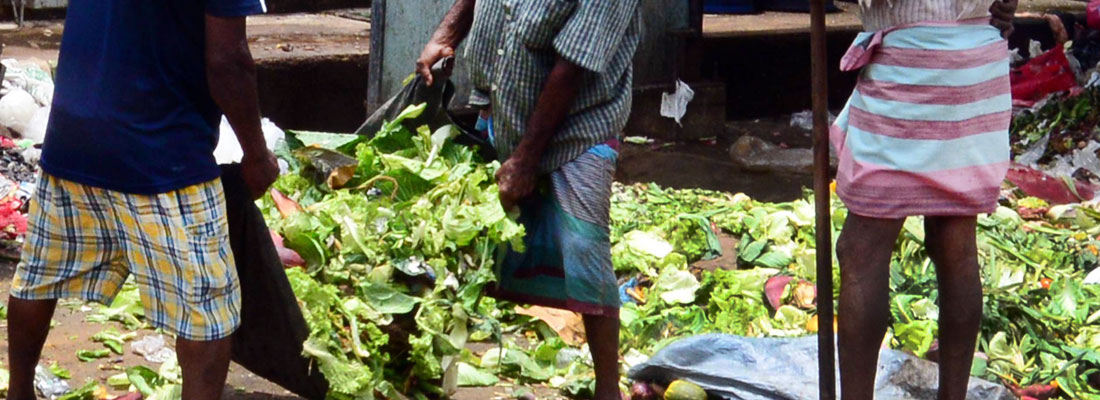
Around 38% of fruits and vegetables are lost post-harvest Pix by Eshan Fernando

During his campaign, the newly elected president, Anura Kumara Dissanayake, addressed this issue, promising, “If I come to power, I will take action to reduce this post harvest loss which impacts both farmers and consumers”

Last Sunday, Sri Lankans chose Mr. Dissanayake as their president. Interestingly, exactly a week into his presidency, the first globally recognised day under his leadership is the International Day of Awareness on Food Loss and Waste Reduction, perfectly aligning with a key campaign promise.

This international day, designated by the United Nations in 2019, highlights the urgent need to tackle the vast quantities of food lost and wasted globally.

Sri Lanka already has a dedicated institution for this cause—the National Institute of Post Harvest Management (NIPHM)—which operates under the Ministry of Agriculture to improve post-harvest technologies. While acknowledging NIPHM’s efforts, President Dissanayake emphasised the need for these technologies to be implemented at the grassroots level to effectively reduce losses.

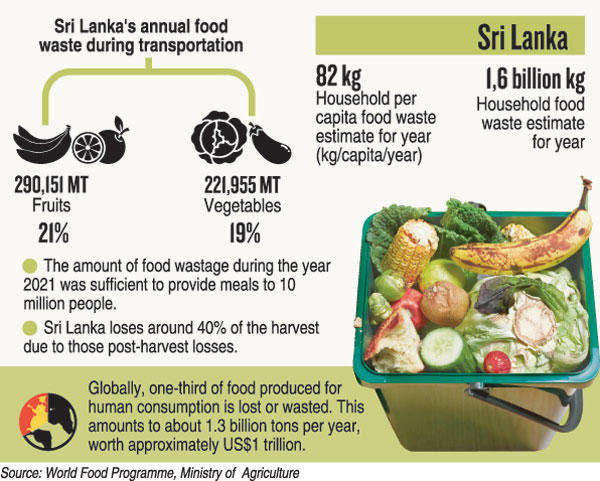
The largest loss in Sri Lanka occurs during transportation. According to the Ministry of Agriculture, approximately 221,955 metric tons of vegetables and 290,151 metric tons of fruits are wasted annually during transport due to improper handling. This equates to 19% of vegetables and 21% of fruits being lost each year.

President Dissanayake stressed the importance of packaging in reducing these losses, noting that in developed countries, packaging is a standalone industry. “Farmers’ associations or private investments could handle packaging in agriculture sector, also creating new jobs in the process,” he said during his campaign.

He also pointed out the critical need for increased storage facilities. “Governments have not prioritized setting up enough storage facilities for vegetables and fruits. Proper storage allows surplus harvests to be saved for future use, stabilising prices and benefiting both farmers and consumers,” he added.

Now, with the presidency in his hands, Dissanayake has the opportunity to turn his campaign promises into action, benefiting both consumers and farmers alike.

At the same time, an ambitious initiative known as the CIRCULAR Project, led by the Food and Agriculture Organization (FAO), is set to launch in Sri Lanka with the support from the European Union (EU). The project aims to address food loss and waste using a circular economy approach, which emphasises reusing, recycling, and optimising resources across the food supply chain.
The project will be implemented in Colombo, Nuwara Eliya, and Galle, involving data-driven assessments of food loss and waste, states Carmen Moreno, Ambassador of the European Union to Sri Lanka, and Vimlendra Sharan, FAO Representative in Sri Lanka. It will also support the adoption of digital tools to help stakeholders along the food chain identify and address the root causes of waste.

Additionally, the project will contribute to the recovery and reuse of food waste, improving food access for vulnerable communities and reducing the environmental footprint of the food supply chain. By tackling food loss and waste, it aims to enhance food security, improve rural livelihoods, and support sustainable agricultural growth, Mr. Sharan noted.

While many ambitious projects have been initiated in Sri Lanka, they often falter once funding dries up. However, with a fresh president who has promised a new direction for the country, this FAO-backed initiative presents a unique opportunity. The president’s vision for reducing post-harvest losses seems aligns perfectly with the CIRCULAR Project.

This collaboration could be the perfect platform for President Dissanayake to demonstrate how to use the science and technology to lead Sri Lanka toward a more sustainable future.

For Christmas, a star of wondrous beauty bright

December 19, 2021

https://www.sundaytimes.lk/211219/news/for-christmas-a-star-of-wondrous-beauty-bright-466209.html published on SundayTimes on 19.12.2021

Leonard’s comet code named as C_2021_A1 (c) Bayfordbury Observatory (University of Hertfordshire)

According to the legends, a comet appeared in the sky on Jesus Christ’s birth in Bethlehem. Setting the right tone for this Christmas season, a comet appears on the night sky these days, where you may also barely be able to observe it through the naked eye as a dot.

This comet was discovered by astronomer G. J. Leonard in January this year; hence it was named Leonard’s comet. Comet Leonard made its closest approach to Earth last Sunday, 12th of December, getting more prominently visible at the horizon at sunset closer to the planet Venus or the evening star. Today – on the 19th of December; the comet would appear closer to Venus.

The comet Leonard is a fast-moving object in space estimated to be traveling 71 km(44miles) per second. According to the astronomers, the comet will pass the sun on the 3rd of January next year, eject itself from our solar system after that. It is better to use a telescope to observe this comet, says Prof. Chandana Jayaratne, from the Department of Physics, University of Colombo.
Visit Sri Lanka Science Channel for more information https://www.youtube.com/watch?v=aZoJpB5fsKU

The position of the Leonard’s Comet on 19th of December. Image courtesy of Sri Lanka Science Channel.

Satellite-tracked gull reveals migratory secrets

December 19, 2021

https://www.sundaytimes.lk/211205/news/satellite-tracked-gull-reveals-migratory-secrets-464385.html Published on SundayTimes 05.12.2021

This Heuglin’s Gull has become the first migratory bird to Sri Lanka tracked with GPS to have completed a full migration cycle. It is also the first known bird to have flown to the European Arctic from Sri Lanka.

A migratory gull’s return to Sri Lanka from northern Russia has been charted in a milestone joint project in which researchers used a global positioning system transponder fixed to the bird.

The team tracked a Heuglin’s Gull which flew to the edge of the Arctic in northern Russia from Mannar. It was tagged on April 4 this year, but had flown from Sri Lanka after 20 days. The gull they named ‘Menike’, had flown a total of 19,360 kilometres.

It flew 7,880km over 35 days to reach its breeding grounds in Yamal Peninsula in northern Russia in the Arctic region and began the return journey in late August. The bird made several stopovers over 91 days and arrived in Mannar on November 4 — six months and nine days after leaving Sri Lanka.

“With her safe arrival, ‘Menike’ becomes our first tagged bird to complete a full migration cycle and also the first known bird to travel to the European arctic from Sri Lanka,” says Prof. Sampath Senevirathne and Gayomini Panagoda, who led the team.

May be an image of map and text that says 'Search Devices Greenland Norwegian Iceland Sweden oSea Track deve: 3246 Norway Finland Denmark Ireland Russia Germany France Ukraine Austria Romania North Spain Portugal Kazakhstan Greece Turkey Tunisia BeringSea Mongolia Morocco Algeria okhotsk Turkmer Kyrgyzstan Syria Western Libya Egypt Mauritania China Niger Saudi SouthKorea South Japan Chad Sudan Oman Nigeria Ghana Yemen SuoA Myanmar South Ethiopia aoBg Somalia Thailand Vietnam PhilippineSea Philippines Ûalaysi Satellite-tagging Project/ FOGSL/ CAS/PH/WI'

This study is a joint project by the Field Ornithology Group of Sri Lanka (FOGSL) of the University of Colombo and the Research Center for Eco-Environmental Sciences of the Chinese Academy of Sciences.

Mannar was chosen because this is where many migratory birds first enter Sri Lanka.

The team had received 35 GPS tags which they also fixed on other migratory birds.

The Heuglin’s Gull is a large white-headed bird found only in the north-western and northern coastal regions of Sri Lanka during the migratory season. It is a member of Lesser Back-backed Gull (Larus fuscus) complex, which consists of five similar looking gulls.

Prof Seneviratne said the migration and breeding destinations of the Larus fuscus Gulls spending winter in South Asia are not well-understood, “so we specially want to tag a bird also with intention to study the boundaries of the ‘Central Asia Flyway’, where birds used to migrate to Sri Lanka’’.

The team tags the Heuglin’s Gull in Mannar on April 4 this year. The bird flew away 20 days later and returned in November.

“Though it reached its breeding grounds early, ‘Megha’ was a bit late to initiate his southward journey, leaving the Arctic only in early October. ‘Megha’ is now close to Sri Lanka, and we expect it to reach us in a few days,” Ms Panagoda told the Sunday Times.

A Brown-headed Gull they tagged had crossed the Himalayas in May this year. It was only the third bird to have crossed this extreme height.

The FOGSL together with the Department of Wildlife Conservation (DWC) initiated Sri Lanka’s National Bird Ringing Programme centered in Bundala in 2004 under the guidance of Prof. Sarath Kotagama.

“GPS-tracking helps to understand the pathways of the birds and can lead to solving many mysteries of bird migration,” says Prof. Kotagama.

Prof. Seneviratne says the Wetland International, DWC and Sri Lanka Navy and the local sponsors Palmyrah House and the Vayu Resort in Mannar too should get credit for the project.

The team also tagged a second Heuglin’s gull named ‘Megha’ which flew away on April 4. It was the first to reach northern Russia by mid-May, says Gayomini Panagoda who is working on a doctoral project.

WildLanka symposium brings wildlife researchers and experts together

August 22, 2021

https://www.sundaytimes.lk/210502/news/jaw-bomb-success-story-shines-as-wild-lanka-treasures-441942.html published on SundayTimes on 21.05.2021

WildLanka symposium is held online steered by a panel of experts operated from the DWC head office

For three months, a young elephant that had its mouth blown apart with a cruel hakkapatas (explosive bait) was fed buckets of fresh juice and crushed grass through a tube inserted through a slit in its neck until its mouth healed.

The animal’s life hung by a thread.

Eventually, success followed the work of the veterinary surgeons and support staff at the wildlife department’s Elephant Transit Home (ETH) in Udawalawe, and the wounded elephant recovered and was released back into the wild.

It was among three of 13 elephants maimed with hakkapatas that have recovered after treatment at the transit home.

Scores of elephants, most of them young animals under the age of 10, are killed with these explosive devices disguised in fruit when they inquisitively nose them out among the litter on the jungle floor. The “jaw-bombs” have killed at least 425 elephants between 2010-18.

The veterinary procedures taken to save the tragically few elephants that survive have been recorded in a scientific paper presented by Dr. Vijitha Perera and his team of wildlife officials at the recent WildLanka symposium.

Scientists applauded the fact that symposium provided the opportunity for such valuable information to be shared and used elsewhere in the world instead of the vets’ heroic efforts being confined to the log books of the wildlife department and forgotten.

Success stories in print

WildLanka is the annual symposium of the Department of Wildlife Conservation (DWC), bringing together the country’s wildlife researchers and administrators. Its most recent session, on April 6-7, was held as an online forum.

A total of 62 research papers were presented, with four keynote speeches delivered by veterans of the subjects. The symposium is the crown jewel of the department’s scientific journal, WildLanka, launched in 2005.

“People just see the DWC as an agency whose job is just chasing elephants and doing trouble shooting managing wildlife human conflicts, but there are more technical things that we do behind the scenes in achieving conservation goals.

“Knowledge of these efforts were not being shared with the public and other experts, so we started the WildLanka journal to fill this gap,” the department’s Director of Operations, Ranjan Marasinghe, said.

“When the journal started in 2005, WildLanka was a biannual publication that received 50 papers, mainly from the scholars of universities that research wildlife. Now we are getting more papers, so we publish four issues annually,” Mr. Marasinghe said.

“In 2014, we started WildLanka Symposium to provide a platform for DWC officers and researchers to interact with experienced experts in wildlife locally and internationally.

WildLanka is a peer-reviewed journal with both Sri Lankan and international experts scrutinising the research papers submitted, chief editor Nilanthi Rajapakse said.

“It has been challenging to put on such symposiums during COVID-19 but the pandemic also had its silver lining. For example, we used to get down foreign experts, spending a lot of money for air tickets and accommodation, but COVID forced us to go online and we can now get more experts involved in the symposium, which provides us with more opportunities,” Ms. Rajapakse said.

Professor Devaka Weerakoon of the Department of Zoology of the University of Colombo said the journal and symposium provided a means to illuminate the significant high-level scientific knowledge possessed by wildlife staff.

She said it was especially beneficial to the field when papers saw collaboration between department experts and researchers at universities. Papers presented at the WildLanka symposium last month covered subjects ranging from a project on individual identification of the leopards of Yala, mangrove diversity at the Vankalei sanctuary, the population decline of sawfish, freshwater fish diversity in some parks, the grading system of bungalows in wildlife parks and many aspects of human-elephant conflict.

For more success stories of the Department of Wildlife Conservation go to http://journals.dwc.gov.lk/ to browse past issues of WildLanka online. Printed issues are available at the department for anyone to purchase.

As decade of Ocean Science starts, scientists urge to end silo approach to marine research

August 22, 2021

Published on SundayTimes on 21.02.2021 https://www.sundaytimes.lk/210221/news/end-silo-approach-to-marine-research-scientist-urges-433244.html

It is to Sri Lanka’s credit that there are so many bodies engaged in ocean science research but it is vital that data is pooled so that the country can learn how to use marine resources without destroying them, a leading scientist said.

Professor Charitha Pattiaratchi’s call comes at the start of the United Nations’ Decade of Ocean Science for Sustainable Development (2021-31), aimed at raising awareness of the challenges and opportunities provided by the oceans.

Among the many government agencies involved in marine research are the National Aquatic Resources Research and Development Agency (NARA), Department of Fisheries Resources, Department of Coast Conservation, the navy and coast guards, as well as the Department of Meteorology and the Disaster Management Centre, which collect data on specific aspects of oceans.

Then there are the universities conducting oceanic research, with the Ocean University and University of Ruhuna in the lead. Added to this are non-governmental organisations and private research bodies studying ocean sciences.

“It is important to share data and to have proper coordination of the different responsibilities in order to achieve better results in the area of ocean science” said Dr. Pattiaratchi, Professor of Coastal Oceanography of the University of Western Australia’s Ocean’s Institute.

“Sri Lanka also has an International Centre of Excellence on the Marine Environment sponsored by the Indian Ocean Rim Association (IORA). This has been dormant for many years and the ocean decade could be a good starting point to reactivate it,” Prof. Pattiaratchi pointed out.

Research is critical for Sri Lanka’s fishing industry. Lack of scientific data has led many fish species to the brink of extinction due to overfishing, marine biologist Daniel Fernando, co-founder of Blue Resources Trust, told the Sunday Times. Mr. Fernando recommends that the government increase monitoring of the fishing industry and work closely with NGOs in research.

NARA said it wants to increase research activity in the Ocean Decade. It said it continues to collect data on fish stocks in Sri Lankan waters, building on the survey initiated by the Norwegian research vessel, Dr Fridtjof Nansen in 2018.

NARA’s research vessel, Samudrika, has been conducting marine research around Sri Lanka since 2012, the head of NARA’s Marine Biological Resources Division, Dr. Sisira Haputhantri, said.

The Chairman of the National Science Foundation, Prof. Ranjith Senaratne, points out that while the country has about 200 degree courses, only a handful of these relate to oceanic science.

“Only about six courses (less than 3 per cent) deal with fisheries and ocean sciences. This is despite the fact that Sri Lanka has an Exclusive Economic Zone (maritime area) eight times its landmass,” Prof. Senaratne, a former vice chairman of the University Grants Commission, said.

“Given the fact that Sri Lanka’s future prosperity lies in the ocean, Sri Lankan universities should offer more courses related to fisheries, marine science, marine engineering, ocean resource engineering, port management., sea sports and maritime recreation, nautical science, fibreglass technology and boat-building and so on.

State-of-the-art Norwegian research vessel Dr Fridtjof Nansen conducted research in Sri Lanka

“We need to harness the biological, chemical and physical marine resources of the country which hitherto remain almost untouched and untapped,” Prof. Senaratne said.

Prof. Pattiaratchi said that while the populations of Australia and Sri Lanka are similar in numbers, there were about 1,000 times more scientists working on ocean research.

“Lack of interest in studying ocean sciences could also be cultural,” he pointed out, noting that in Sri Lanka, most people aspire to become doctors and engineers, with very few taking up ocean sciences.

“Sri Lankans have very limited interaction with the sea. We do not have a culture of using the sea for recreation work such as swimming, surfing or diving so, there is a lack of interaction with the ocean and a lack of new blood wanting to become ocean explorers,” said Dr. Pattiaratchi, adding that he had been determined from the age of 14 to become a marine scientist.

Pioneering clean-up by Matara volunteers

A hundred volunteers gathered at Matara beach for clean-up operations heard how important their work was in a country where many fail to understand the importance of ensuring a clean ocean.The head of the Marine Environment Protection Authority, Dr. Terney Pradeep Kumara, told the volunteers cleaning up Matara’s main beach on the Poya holiday last month that they were acting on one of the Ocean Decade’s priorities: eliminating sources of ocean pollution.The Matara operation was important for the area: beach cleaning programmes are common at beaches closer to Colombo but rarely found elsewhere.A speciality of the programme at Matara is that it is driven purely by volunteers. Its mastermind, eye surgeon Dr. Priyanga Iddawela, said that having been raised in Kandy he lacked interaction with the ocean. He urged residents of coastal areas not to pollute their environment.
 

Need of using innovation in wildlife conservation stressed

September 19, 2019

http://www.sundaytimes.lk/190915/news/snake-specialist-charmed-by-the-attention-368310.html  Published on SundayTimes on 15.09.2019

WildLanka is the annual symposium of the Department of Wildlife Conservation that brings together wildlife researchers and administrators of the country. All keynote speeches were delivered by experts from other fields – one was an ICT expert, while the other two are engineers.

Chandana Sooriyabandara – the DG of Wildlife

DWC head Chandana Sooriyabandara at the symposium

Innovative solutions devised collectively by experts are needed to address wildlife challenges, was the message that emerged from speeches at a symposium on ‘Innovation for Conservation’, held at Waters Edge from September 2-3.

The first speech was delivered by the group chief information officer and the center head for Virtusa Sri Lanka, Madu Ratnayake.

“When we say innovation, often the technological innovation comes into our mind. But there can be innovation in other means that can help to achieve conservation successes. The way we work, methods, work process are some of the areas that can be improved by innovation,” he said.

Delivering the keynote address on “Using Technology in protecting wildlife and mitigating human-wildlife conflicts,’’ Mr Heminda Jayaweera, the chief operating officer of the Sri Lanka Institute of Nanotechnology, stressed the importance of identifying the issue before providing a solution.

The engineer said that innovative solutions can emerge from the collective efforts of experts from different fields.

The Minister of Wildlife and Tourism, Mr John Amaratunge was chief guest of the WildLanka symposium.

“Through WildLanka, the department aims to encourage research on wildlife, which is required in taking management decisions in conservation. More importantly, we want to improve the research capability of the department itself, while encouraging wildlife officers to carry out more research on relevant fields,’’ said Chandana Sooriyabandara, the director general of DWC.

Held for the sixth year, WildLanka 2019 witnessed 46 research papers. Twenty of these were presented by wildlife officers of the DWC and the rest by researchers at universities and other institutions. The presentations were judged by experts and recognised at the end of symposium.

The research papers based on presentations made at the symposium are published in WildLanka, the journal of the department. The DWC has been publishing this quarterly science journal since 2006. The symposium is its annual event.

“WildLanka is a peer-reviewed journal where the papers are assessed for accuracy and quality by an editorial panel of experts. Experts from India, Malaysia and the US are also part of the WildLanka editorial board,” said Chief Editor, Ms Nilanthi Rajapakse.

There has been a gradual increase in the contribution of research papers to the WildLanka journal and it is encouraging, she said. For example, over 75 papers were presented at the symposium, whereas only 46 was selected, Ms Rajapakse, said.

A deputy director of DWC, Ranjan Marasinghe, said the department also tries to use technology in conservation and management
The DWC introduced the SMART (Spatial Monitoring And Reporting Tool) patrolling in a number of national parks to measure, evaluate and improve the effectiveness of wildlife law enforcement patrols and site-based conservation. SMART helps the patrolling groups to collect field data.

Technology tools for wildlife research
 The three-day symposium of Association of Tropical Biology and Conservation’s Asia-Pacific chapter (ATBC-AP) held this week involving about 400 scientists (with half of them foreign) working on tropical biodiversity also demonstrated instances of using innovative methods in wildlife study.Lakimini Abeywardhana, who studied IT and is doing post-graduate studies at University of Colombo, presented her research developing an application to identify tiger beetles. This is a rare groups of bugs and this illustrates how experts from different fields can assist wildlife research.

“This was started towards the end of 2017. Not having images due to their endemicity and rareness has been an issue and I’m now trying to increase the accuracy of the app with limited images,” she said.

Tharaka Kusuminda, a doctoral student at University of Ruhuna illustrated how he used sound to identify the bat species, the painted bat.

“Bats use ultrasound to find their pathway and food and these are out of our hearing range. To be sure whether a particular species of bat is in an area, rigorous observation has to be done. Sometimes, you need to catch one. But I identified the frequency of the painted bat and now we could record the sound and by analysing, we could find out the presence of painted bats,’’ Mr Kusuminda said.

Catharina Karlsson, a researcher of frogs, shared information about innovative identifying devices she used for her doctoral study at Malaysia’s Kinabalu Park.

“There are about 15 species of frog in the study, but they are so tiny and usually hidden under logs and so on. But each species has a unique sound, so I developed a device to record the sound. Its analysis helped to identify the frog,” said Ms Karlsson. “It was not easy. The devices failed initially, but with the assistance of my father in assembling the electronic devices properly, I could gain the results,” she said.

Watch video on Catharina Karlsson’s study through following link.

http://www.youtube.com/watch?v=n-o33wtcTmQ

Researchers rewarded for published, locally-relevant projects

September 7, 2019

http://www.sundaytimes.lk/190901/news/researchers-rewarded-for-published-locally-relevant-projects-366270.html published on SundayTimes on 01.09.2019 

About 240 Sri Lankan scientists involved in 100 different research fields including medicine, agriculture, engineering and basic sciences were honoured at the 12th President’s Awards for Scientific Research.

NRC Chairman Prof.Janaka de Silva addressing the audience

The awards were held in Colombo under the patronage of President Maithripala Sirisena on August 26.

Research peer reviewed and published in internationally recognised journals, is a measure of success of an endeavour. So this was used as a yardstick in selecting the best scientific research.

The President’s Awards for Scientific Research (PASR) is an annual event organised by the National Research Council of Sri Lanka (NRC), an institute under the Ministry of Science, Technology and Research.

“The award scheme was initiated in 2001 to encourage Sri Lankan scientists to increase their research output both in terms of quality and quantity,” said Prof Janaka de Silva, the chairman of NRC, in his speech.

The awards are given two years after the year of publication of a paper or obtaining a patent.

“For example, the achievements in 2017 are given awards in 2019. This provides enough time for completeness of indexing and documentation where publications are assessed,” Prof de Silva explained.

To make it transparent and prevent bias toward any scientific discipline, an internationally acclaimed scoring system was used to rank the scientific publications for the PASR.

“From this year onward, awards are given for a published work rather than to an individual scientist, and all Sri Lankan co-authors with a Sri Lankan institution affiliation of the publication is recognised as recipients of the award,” he explained.

Prof de Silva said that the NRC wishes to encourage research that is conceptualized and performed mainly in Sri Lanka, so the consideration has been given to the level of contribution made by Sri Lankan scientists to the research and publication in instances where there is international collaboration.

“The NRC regularly reviews and revises the selection criteria, with a view of retaining the relevance, and prestigious nature of the awards,” Prof de Silva added.

This year is special. The National Research Council completes 20 years since it was founded in 1999.

NRC was a result of a concept by Prof Arees Kovoor, the first chairman of the institute and the world-renowned scientist, the late Dr Arthur C Clarke. In 2016, the NRC was made a statutory body granting it more powers to operate in promoting science in Sri Lanka through funding and facilitating research.

Scientists can approach NRC with a proposal to obtain funds. There are many research undertakings that became a reality through NRC funding.
Last year 2018, NRC gave Rs 174.62 million for research. Most of these funds were allocated to research on the environment, geo sciences, and chemical sciences.

Five teams of scientists awarded the NRC’s first Target Oriented Research Grants five years ago, revealed their progress and important findings that have national importance.

These included a project to develop polyvalent anti venom for snakebites in Sri Lanka; introduction of two new chilli hybrids that gives higher yields than imported chilli hybrids; introduction of a drought tolerant rice, and increase milk production in dairy cows.
Prof.Indika Gawarammana of University of Peradeniya, who spearheaded the development of local anti-venom for Sri Lankan snake species said that the NRC funding kept the project going.

“But in addition to the funding, NRC also gave our project all important legitimacy and made it a project of national importance. NRC also helped to remove red tape in the process of development of the anti venom,” Prof.Gawarammana said.

Dr.Kalana Maduwage is another researcher from University of Peradeniya who received three awards this year.

Previously. Dr.Maduwage had been honoured seven years for his research.

“I first received the President’s Award in 2005 when I was still a medical student. It was a big achievement for me as a young researcher and a confidence builder that I can produce high quality research,” Dr.Maduwage who also won number of foreign awards, told the SundayTimes.

Create ocean science ‘champions’ to boost nation’s security

July 14, 2019

Sri Lanka needs to understand how critical the resources of the ocean are to an island nation’s security and end its centuries’-old apathy about protecting its maritime base, leading scientists told a conference.

The state-of-the-art Control room of the Norwegian research vessel Dr. Fridtjof Nansen

“As an island nation, the resources of the ocean are very important for development and changes to ocean patterns can bring bad impacts. Sri Lanka needs to put more effort into developing understanding of the oceans around us through scientific research,” Marine Environment Protection Authority (MEPA) General Manager Dr. Terney Pradeep Kumara said.

Culturally and historically, society had been detached from the ocean and the education system needed to bridge this gap.

“We haven’t realised the importance of coastal zones. For example, most often the cemeteries of villages along the coastal belt are set up adjacent to beaches, proving that, traditionally, Sri Lankan society hasn’t realised the importance of ocean and related ecosystems,” Dr. Pradeep Kumara said.

His comments were made on Ocean Science Day, marked on June 27, organised by the Intergovernmental Oceanographic Commission (IOC) of UNESCO, which is composed of 150 member states, including Sri Lanka.

The head of the IOC’s Ocean Science Section, Dr. Arico Salvatore, said Ocean Science Day – now in its second year – was established to demonstrate that ocean science aids societal goals.

Dr. Salvatore emphasised that countries such as Sri Lanka can benefit greatly from ocean science, particularly with ocean-based weather predictions that allow more effective planning of agricultural and fisheries operations.

“The tsunami warning system is a clear example how the application of ocean science can be used to save lives,” he added.

Ruhuna University’s Faculty of Fisheries and Marine Science students conduct research on board Dr. Fridtjof Nansen

Sri Lanka and adjacent countries benefit from the Indian Ocean Tsunami Warning and Mitigation System set up under the IOC’s leadership. At the time Sri Lanka was hit by the deadly tsunami of 2004, the Indian ocean region lacked a tsunami monitoring system. The late Professor Samantha Hettiarachchi was a major contributor to the success of the warning system, which began working in 2006.

“Sri Lanka has a lot of talent that will create champions in the field of ocean science. We are lagging behind in this field so we need to focus on a program to train more scientists in ocean science,” said Dr. Pradeep Kumara, a former head of the Department of Oceanography and Marine Geology at the University of Ruhuna.

Ocean science has evolved rapidly in recent years in response to growing international interest in ocean use, climate change, environmental protection and the conservation of ocean resources, and Sri Lanka needs to ride on this bandwagon and not get left behind, he said.

Dr. Upul Premaratne, Dr Pradeep Kumara’s successor at the university, said the faculty worked hard at producing quality graduates and it was important that job opportunities be created for them to prevent them going abroad where there was high demand – particularly in developed countries – for experts in ocean science and fisheries.

Another University of Ruhuna expert, Senior Professor Ruchira Cumaranatunga stressed the need for more resources. “We need a full-fledged research vessel that can continuously monitor the ocean around our country without us depending on other countries,” he pointed out.

Developed nations such as Norway have been showing Sri Lanka how to use modern technology in fisheries and other ocean sciences. Twenty Sri Lankan scientists were given the opportunity to sail on the Norwegian research vessel Dr. Fridtjof Nansen, which recently surveyed the ocean around Sri Lanka, assessing fish stocks and ecosystems.

The trip provided a novel experience for Sri Lankan scientists to familiarise themselves with the latest technologies, National Aquatic Resources Research and Development Agency (NARA)  scientist Dr. Prabath Jayasinghe, said.

Published on 14.07.2019 on SundayTimes http://www.sundaytimes.lk/190714/news/create-ocean-science-champions-to-boost-nations-security-358269.html

Use forensic science to drag Mugalan’s killers into court

December 16, 2018

Top expert urges rethink on wildlife crime investigation. Published on SundayTimes on 09.12.2018 http://www.sundaytimes.lk/181209/news/use-forensic-science-to-drag-mugalans-killers-into-court-323990.html

[Note: this was published alongside of article investigating the slain of the Udawalawe Tusker ‘Mugalan’ http://www.sundaytimes.lk/181209/news/investigations-reveal-elephant-killed-for-its-tusks-2-suspects-remanded-323993.html]

Investigations into crimes against animals should be handled as forensically as normal criminal investigations, a top animal crimes expert urged as sadness and anger swept the nation over the killing of the Udawalawe tusker, Mugalan, last week.

Ravi Perera is regularly engaged in solving wildlife crime cases in Africa, especially in Kenya

The maximum penalty for the culprits was urged.

“A proper crime scene investigation is the first step in tackling wildlife crimes,” said Ravi Perera, an international expert in wildlife crime who has offered, using his Serendipity Wildlife Foundation, to train Sri Lankan personnel to investigate such incidents.

Mr. Perera has nearly 25 years’ experience in forensic investigation, with special expertise in wildlife crime. Now based in the United States, he is regularly engaged in solving wildlife crime cases in Africa, especially in Kenya where organised gangs of poachers hunt elephants and rhinos for their tusks and horns.

“While the method of investigation is the same, a wildlife crime scene is very different to everyday crime scenes in cities’ Mr. Perera explained:

investigators are dealing with possibly a decomposing carcass or a carcass that has been partially or completely devoured by another animal.

“Very often, we have to work in harsh surroundings, rough terrain, and even in dangerous situations where elephants and rhinos could return to the location to protect the dead,” Mr. Perera said.

While a crime scene in urban areas could be sometimes worked with one or two personnel, a crime scene in the wild would require armed guards to secure the scene as well as personnel to take photographs, gather evidence and search the crime scene.

The crime scene itself is much larger in the wild, where a suspect’s shoe or footprints or a tyre track from a vehicle could be located several hundred meters away.

The animal could have been shot at one place but have succumbed to its wounds a distance away. The location where the animal was shot is as important as the place it died as key evidence could be found at either location or in between them.

“In shooting cases such as Mugalan’s it is important to focus on key evidence such as the projectiles (bullets) recovered from the carcass. If the projectile is not severely damaged, there is equipment in forensic labs to determine the type of weapon it was fired from,” the expert said.

Most projectiles found in animals remain intact due to body mass and bones unless there is an exit wound and the projectile is unrecoverable.

Mugalan shot at close range in Udawalawe. Pix by Rahul S. Hettiarachchi

“We also search for the casings that have been ejected from the weapon. Should a weapon be recovered, these casings can be matched in the lab to a test-fired casing from the weapon. Very often, a perfect match is enough to convict a criminal.

“If a suspect is found, a suspect’s clothing that he wore at the time of the shooting can be examined for gunshot residue,” Mr. Perera said.

Poachers in Sri Lanka also use wire snares and “hakka patas” – improvised explosive devices embedded in food that blow the animal’s head apart.

“Unfortunately, obtaining evidence from snares is almost impossible,” Mr. Perera said. “You have catch the culprit in possession of the device to even consider prosecution.

“Hakka patas too would be very hard to analyse for evidence as it is often discovered after the damage is done, and gathering DNA evidence to match to the suspect is impossible due to the fact that it has been severely contaminated with the baited fruit and is then mixed with the elephant’s saliva and other body fluids – not to mention that the explosion further destroys your evidence.”

Mr. Perera, who works with international agencies in curbing wildlife crime, raised the need for Sri Lankan authorities to use new tools and technology.

“Forensic tools and technology have increased in leaps and bounds within the last eight to 10 years,” he said. “When it was previously impossible to do so, presumptive blood tests, gunshot residue-testing, thermal imaging, infra-red photography, fingerprint analysis and much more can now be done onsite and the results obtained within a few minutes.

“Forensic crime labs are also equipped with laser imaging and various light sources to analyse fingerprints and machines to process DNA and obtain results in about an hour,” he said.

Ravi with the last remaining Northern White rhino Sudan before its death

How the public can aid investigations
People often gather at the site of an animal killing to satisfy their curiosity but wildlife expert Ravi Perera said vital evidence is destroyed when the site is indiscriminately trampled over.

Mr. Perera urged the public to support wildlife crime investigations by not disturbing the evidence.

“Our aim is to prevent contamination of the crime scene. If a crime scene is contaminated, it could compromise the entire case,” he said.

This is the reason that we secure an urban crime scene with yellow tape – to keep investigators in and keep all others out.

“Every single item located in that crime scene is regarded as important. Cigarette butts, discarded and crushed receipts, bus and train tickets, clothing, blood, water bottles, tyre tracks, shoe/foot prints and drink cans can be potential evidence. A receipt from a shop (with a date and time printed) can be used to identify a suspect on the shop’s video surveillance system, and then we have a ‘face’ to work with.

“In Sri Lanka, I see crime scenes totally destroyed when villagers and curious onlookers come right up to an animal carcass, and sometimes even touch it. It is important that a secured perimeter be established before work commences at the scene.”

Science puts Lanka in headlines for all the right reasons

December 2, 2018

While power-greedy politicians vociferously tarnish the image of country through their undemocratic fights, scientists silently bring some dignity to the name of Sri Lanka.

Marine biologist Asha de Vos

Marine biologist Asha de Vos and cancer researcher Hasini Jayatilaka brought honour to the country when they were internationally recognised this month for their tireless efforts and groundbreaking discoveries.

Ms. de Vos, known worldwide for her research on blue whales and for campaigning for the conservation of oceans, was named in “BBC 100 Women 2018” – a list of 100 inspiring and influential women chosen from 60 countries.

“Asha works in the area of marine conservation to increase diversity, inclusivity and opportunity in the field” BBC stated on November 19.
“I can’t tell you how proud I am to keep putting Sri Lanka on the world map for all the right reasons!” Ms. De Vos said, when notified of the honour.

Marine biology is usually dominated by males but Ms. De Vos’s trailblazing marine research has made her an idol for Asian women.

“I fight for the people in the developing world because 70 per cent of coastlines are around our shores, but because of the exclusive nature of marine conservation very few people have gone into the field. That is what I am changing,” the determined scientist said.

“I will not rest until I see people from all corners of the globe empowered to look after their patch of ocean, so together we can save not just this big blue tank of water but also ourselves.”

The other Sri Lankan scientist honoured few weeks ago, Hasini Jayatilake, was named in the prestigious Forbes Magazine’s list of “30 Under 30” young innovators, entrepreneurs and risk-takers who are changing the world and have been identified as leaders for the next generation.

Dr. Jayatilaka, just 28, discovered a signalling pathway that controls how cancer cells metastasise (multiply) through the body and a way to block that pathway. This has led to the development of new treatment targeting tumour growth and metastasis.

Currently a postdoctoral researcher at Stanford University in the United States, Dr. Jayatilaka was born in Australia and raised in Sri Lanka, studying at Ladies’ College, Colombo.

Her education is international: she engaged in undergraduate studies in marine and environmental biology at the University of St. Andrews in Scotland, gained her Masters in integrative bio-sciences at the University of Oxford and has PhD from the University of Western Australia and Johns Hopkins University in the States.

Meanwhile, last week the annual President’s Awards for Scientific Publication hailed 338 scientists for publishing high

Cancer researcher Hasini Jayatilaka

-impact scientific papers.

The awards were started in 2001 to recognise Sri Lankan scientists with a Sri Lankan institutional affiliation whose work reached international standards.

The publications are peer-reviewed and are awarded after a two-year gap to allow scientific scrutiny for the academic work’s validity and accuracy. This year’s awards recognised work published in 2016.

The awarding scheme is organised by the National Research Council (NRC), set up under the Ministry of Science, Technology and Research.

“This award scheme was initiated in 2001 because of the perceived need to create a better research culture in our country by encouraging Sri Lankan scientists to increase their research output both in terms of quality and quantity, which was, at that time, at a very low level,” NRC Chairman Professor Janaka de Silva said.

Published on SundayTimes on 02.12.2018 http://www.sundaytimes.lk/181202/news/science-puts-lanka-in-headlines-for-all-the-right-reasons-322870.html


The smart three-wheeler that doesn’t ‘tuk-tuk’

August 6, 2018

http://www.sundaytimes.lk/180729/news/the-smart-three-wheeler-that-doesnt-tuk-tuk-304677.html Published on SundayTimes on 29.07.2018

An electric three-wheeler with a Lankan heart and a Japanese soul is planning to make travelling eco-friendly
A plan to manufacture an electric three-wheeler in Sri Lanka was revealed this week, with its prototype showcased in Colombo for the first time. The Samurai three-wheeler, built with Japanese technology and currently being tested in Sri Lanka, could be launched in 2020.
The vehicle is powered by two batteries. It has a maximum speed of 60kph with test results showing a more powerful thrust than the normal fuel-powered three-wheeler. At normal cruising range, its batteries could last for about 80km.

Prof.Monte Cassim

The new kid on the block will be silent so the traditional “tuk-tuk” sound will be absent if it is introduced to the roads. Currently being tested at the University of Ruhuna, the Samurai will move to Peradeniya University for test runs on mountain terrains.

Designed by T-Plan Inc., a Japanese engineering consulting company that provides technical support for automobile giants such as Toyota, Daihatsu and Subaru, the Samurai is slightly larger than a conventional tuk-tuk and is designed differently.

The first notable difference is that it has two wheels in front and two at the rear. Japanese engineers say this design is a safety feature that gives the driver more control of the three-wheeler. Sudden turns while driving often result in conventional three-wheelers toppling over but the new design would be more stable. The two wheels in front would hinder reckless and haphazard turns, the designers said.
The changed front shape also provides more space for the driver’s legs, which will help reduce leg injuries in crashes.

One of the major advantages of the electrical three-wheeler is that it is emission-free, which would help achieve climate change-related emission targets. Sri Lanka pledged to make a 10 per cent reduction of emissions in the transport sector, yet the country has large fleet of vehicles that consume fossil fuels. There are more than a million three-wheelers according to the Department of Motor Traffic, and this number is rising.

Electrification of transportation is an urgent task for Sri Lanka because the country spends a huge portion of its foreign reserves on importing fossil fuels, pointed out Professor Monte Cassim, an academic based in Japan who helped initiate the Samurai project. While some question the Samurai’s environmental benefits if electricity is largely generated from fossil fuel, Prof. Cassim has an answer. “Demand for electricity goes down from 10pm-5am and in this period the excess capacity for electricity generated from hydro power etc. goes wasted,” he said.

“Hence this time should be utilised for charging the batteries of vehicles to get the maximum eco-friendliness from the ‘electric vehicles’.” A basic problem with electric three-wheelers is the time it takes to recharge the batteries, with the Samurai’s batteries taking six hours to fully charge. The Samurai team came up with a unique solution: a battery exchange system.

The new kid on the block: The Samurai three-wheeler,

According to this plan, pre-charged batteries would be kept in strategically located exchange stations. Drivers could exchange their used batteries for fully-charged units at these stations in a matter of minutes, in the time it takes to fill up a three-wheeler with petrol.

For the battery-swapping model to be successful a mechanism was needed to inform the driver when the battery is running low and where the nearest exchange station is located.

Fujitsu Group, a well-known, innovative company in Japan, proposed customising its existing cloud-based information exchange system for the Samurai. The Samurai project is one of the initiatives nurtured through the Japan-Sri Lanka Comprehensive Partnership (JCP) set up with a mandate to stimulate science, technology, and innovation-led development in Sri Lanka through Japanese technology.

All-Island Three-Wheeler Drivers’ Union head Lalith Dharmasekara is positive about the electric vehicle. “The drivers are happy about most of the features and if practical issues can be minimised, the new three-wheeler would be popular,” he said.

Norwegian research vessel sail in to probe fish stocks

June 24, 2018

Nansen will address 38-year gap in marine surveys. Published on SundayTimes on http://www.sundaytimes.lk/180617/news/norwegian-researchers-sail-in-to-probe-fishing-stocks-298464.html

The long-awaited Norwegian research vessel, RV Dr Fridtjof Nansen, which sails around the globe helping developing countries set up ecosystem-based fishery management, will reach Colombo on June 22.

The Nansen, regarded as the world’s most advanced marine research vessel, will sail around Sri Lanka for 26 days, surveying oceanic conditions and fish stocks.

The ship is named after Norwegian scientist, explorer, diplomat, humanitarian and Nobel Peace Prize laureate Dr. Fridtjof Nansen (1861-1930), who became famous for his North Pole expeditions. The Nansen Research Programme commenced in 1974.

This is the third consecutive research vessel dedicated to surveying marine resources in developing countries. The ships have made the equivalent of 60 voyages around the globe since the programme’s inception.

The first Nansen vessel surveyed Sri Lankan waters in 1978 and 1980. Since then, no such comprehensive survey on Sri Lanka’s marine environment has taken place.

In the last decades, depletion of marine fish stocks has been rampant. A major aim of the Nansen Programme is to help scientists understand the reasons for such depletion and provide data to help to lessen pressure on fishing.

“Most of the data about fisheries are extractions based on catches by fishermen. An independent study is required to assess depleting fisheries stocks and find out new fishing grounds. There can also be under-utilised fish stocks that can be harvested successfully, and research would help us to identify such opportunities,” said National Aquatic Resource Research Development Agency (NARA) Deputy Director-General Dr. Palitha Kithsiri.

While sailing on a pre-defined path around the Sri Lankan coast, the Nansen will lay nets and carry out experimental trawling at various points. The fish and other creatures caught in the nets will be analysed for detailed information on species, sizes, and catch quantity. As well, acoustic methods will be used to estimate the quantity of fish found in those waters.

Sampling will be undertaken on plankton, fish egg and larvae, jellyfish, top predators and marine life in the main oceanic zones: demersal (bottom-feeding fish in deep waters and on the seabed), mesopelagic (fish found in the intermediate ocean layer, 200-1000m deep) and pelagic (fish that swim largely in open water away from the seabed).

The onboard researchers will collect data on water parameters, sea temperature, and salinity, and will map the sea bed using powerful eco-sonars.
“So, in a nutshell, the research will collect data that will help to implement an Ecosystem Approach to Fisheries (EAF), which is more than simply assessing fish stocks,” Dr. Kithsiri said.

The Nansen Programme is executed by the United Nations Food and Agriculture Organisation (FAO) in close collaboration with the Institute of Marine Research (IMR) of Bergen, Norway, and is funded through the Norwegian Agency for Development Cooperation (NORAD).

The Nansen’s 2018 research campaign began in January in Durban and, after taking in Sri Lanka, is expected to end in mid-October in Thailand, FAO program officer Roshini Gunaratne said.

“The overall objective of the programme is to strengthen regional and country-specific efforts to reduce poverty, create optimum conditions for achieving food security and nutrition through the development of sustainable fisheries management systems” Norwegian Ambassador Thorbjorn Gaustadsaether said.

“Norway, as a maritime nation, believes in sustainable development and plays a leading role in battling marine litter,“ the ambassador added. Plastic pollution of the oceans has become a huge problem: plastic and plastic microfibre being ingested by fish is killing them and has the potential to enter the human food chain through the fish we consume.

Global warming will change the dynamics of the ocean but we know very little about such changes. One obvious example of climate change is the coral bleaching caused by ocean warming.

While sea temperature fluctuations disrupt oceanic currents, excess carbon dioxide, believed to be the triggering fact of global warming, could create acidification by dissolving additional carbon dioxide in seawater from the atmosphere.

Fish species are particularly sensitive to these parameters, so it is expected that changes in acid levels in the seas would change fish movement patterns.

Changing temperatures in the seas could make migratory fish such as tuna, sardines and squid could shift their paths of migration and this would affect fishing catches.

Capacity-building is central to all the activities of the Nansen programme. Twenty Sri Lankan scientists active in the fisheries sector will gain the opportunity to be part of the Nansen programme according to NARA’s Dr. Prabath Jayasinghe, who has been nominated the local cruise leader of the Nansen.

A conference on sustainable development goals linked to the oceans will also take place as part of the visit of the Nansen.

The Nansen vessel docked at Colombo

Nansen’s gear used for experimental fishing

The State-of-the-arts equipment inside the ship

Even fish favourites threatened with extinction
When we visit the market to buy fish from the “malu lella” we seldom think about how these fish that are free-living creatures can face extinction if we continue to catch them without set limits.Some fish, such as sharks, are slow breeders that cannot stand over-fishing. The increasing price of some fish varieties is an indication that they are becoming rarer.Sri Lanka’s favourite fish, the yellow-fin tuna (kelawalla) and seer fish (thora) are categorised as “Near-threatened” on the International Union for the Conservation of Nature’s (IUCN) Red List of Threatened Fauna – only two steps away from the more dire “Endangered” category.Some coral-inhabiting fish such as the hump-head wrasse are “Endangered”, along with elephants and leopards – but fish rarely gain the attention its terrestrial counterparts attract in conservation.

The ocean has different zones based on depths and particular fish inhabit each regions. NARA’s Dr. Palitha Kithsiri said the Nansen’s research will focus on studying the mesopelagic (200m-1000m deep) region, which is currently not much targeted in fisheries.

Tsunami alarm network makes island feel safe than sorry

January 1, 2017

Prof. Samantha Hettiarachchi

Sri Lanka will never be fully protected from a tsunami, but at least people can feel  safer than in 2004, when 36,000 Sri Lankans who perished had not been warned even though they had a two-hour window to reach higher ground.

This week, on December 26, 2004, Sri Lanka along with many other Asian nations, was hit by a tsunami that killed more than 200,000 people. The mammoth wave was generated by an undersea earthquake off Sumatra Island and it took two hours to reach the southern and eastern shores of Sri Lanka.

“Unlike in the past, Sri Lanka is now equipped to issue an early warning in a short period of time,” assures Anusha Warnasuriya, the deputy director of forecasting at the Department of Meteorology. It is responsible for issuing tsunami warnings. An accurate forecast can be made with the assistance of the Indian Ocean Tsunami Warning and Mitigation System (IOTWMS), she said.

By 2004, other oceanic regions already had a tsunami warning system. But the Indian ocean region did not have such a mechanism. So the Indian Ocean Tsunami Warning System was agreed to at a United Nations conference in January 2005. The Indian Ocean Tsunami Warning and Mitigation System became operational in late June 2006 with the leadership of UNESCO’s Intergovernmental Oceanographic Commission (IOC).

A Sri Lankan expert made a major contribution to the warning system.

Moratuwa University Department of Civil Engineering Professor Samantha Hettiarachchi was elected vice chairman of the IOTWMS in 2015 and in October 2016 appointed acting chairman.

“This warning system consists of several seismographic stations relaying information and Deep-ocean Assessment and Reporting of Tsunami buoys that are capable of sensing an upcoming tsunami wave. By also assessing rises in sea-level recorded by the tidal wave gauges, the computer simulation models in regional tsunami service providers can predict of a tsunami,” Prof Hettiarachchi explained.

Currently India, Indonesia and Australia serve as regional TSPs and when an earthquake occurs, the central agency of each country receives an alert. “TSPs issue warnings only to designated bodies and not to other agencies or the public. In Sri Lanka, the met department and the Disaster Management Centre receives information about a tsunami. The met department is the official designated body to receive and disseminate information in consultation with the Disaster Management Centre,” Prof Hettiarachchi elaborated.

The met department’s Warnasuriya said alerts are received from all three TSPs. “Assessing all these warning issued by IOTWMS, our director general in consultation with other stakeholders take a quick decision to issue a warning according to the risk level. The rest of the ground level work such as evacuations are then mainly taken care of by the Disaster Management Centre,” she said. Since 2005, the met department has been tasked with being the central agency to receive tsunami alerts.

Sri Lanka is separated  into 13 coastal forecast zones and sirens have been setup at highly vulnerable places. Tsunami-related evacuation drills had been done on March 29, 2005, September 17, 2007, and April 11, 2012.

“Education, awareness, preparedness, early warning, and response at the country level is essential. Evacuation plans, too, need to be clear. Regular drills are important,” Prof Hettiarachchi advises.

He points out that Sri Lanka is definitely safer against a tsunami threat than in 2004. But due to the nature of the tsunami threat Sri Lanka can never be completely safe, so the island must remain vigilant, he added. Sri Lanka had been slow to conduct national vulnerability studies, but it is an exercise that can help to save lives and property, Prof Hettiarchchi recommended.

He also points out need to protect natural coastal ecosystems such as mangroves, coral reefs and sand dunes to help minimise potential damage from tsunami and other ocean waves.

Published on SundayTimes on 01.01.2017 http://www.sundaytimes.lk/170101/news/tsunami-alarm-network-makes-island-feel-safe-than-sorry-222503.html

Multiple tools used to warn of tsunami

All mobile phone users can be alerted by text messages in the event of a tsunami, a disaster management official says. This is in addition to a warning towers in coastal areas. 

“Now we have setup 77 tsunami warning towers covering the most vulnerable coastal areas of Sri Lanka. There is also one on Delft islands and these can be remotely activated to issue a warning with a siren and message in all  three [main] languages,” said Pradeep Kodippili, the deputy director of the Disaster Management Centre. “But tsunami towers are only one mode of disseminating information to the public.’’

The centre said it has set up a network linking all the key government agencies and assigned pre-defined tasks to be able to act quickly. “We have our own radio frequencies to communicate with all the key agencies and also have the ability to issue an SMS similar to the ones issued by the President to all mobile users,’’ Kodippili said.

“The centre also has a vehicle equipped with communications channels and other necessities, so even if our building is damaged, we are in a position to coordinate management of a disaster,’’ he added.

Any person can register with the centre’s alert system by dialling #117 and by following the instructions. An app called ‘Disaster Early Warning Network – DEWN’ can also be downloaded.

Dream big, major science forum urges Govt.

November 20, 2016

Shehan Rathnavale of COSTI presenting
the Colombo Resolution at STS Forum 2016

Published on SundayTimes on 18.09.20http://www.sundaytimes.lk/160918/news/dream-big-major-science-forum-urges-govt-209002.html

Sri Lanka, near the bottom of the world ladder in inventions, is paying a heavy price for overlooking science in decision-making, a leading scientist warned at a symposium of almost 700 scientists, inventors, science managers and students.

“We are trying to make incremental steps in embracing science and technology but that is not good enough. We need to dream big,” said Professor Ajith de Alwis, Project Director of the Coordinating Secretariat for Science, Technology and Innovation (COSTI) in the Ministry of Science, Technology and Research.

“To make a real difference in the economy, we need to embrace science. For example, by applying technologies, we can bring the cost of food down and enable more disposable income to people,” Prof. de Alwis said.

The high-level forum, Science and Technology for Society Sri Lanka 2016 (STS), ended last weekend with adoption of the eight-point “Colombo Resolution” that stated economic development should go hand-in-hand with social and environmental progress.

The resolution also calls for the country to foster innovation, build resilient infrastructure and follow sustainable industrialisation and foster innovation. Participants repeatedly pointed out that 14 of the United Nations’ Sustainable Development Goals stressed the importance of technology.

The message carried by the forum – the largest gathering of scientists in the country, with participants from 24 countries – would not have been lost on the ministers who were directly involved in it: Deputy Ministers Dr. Harsha de Silva and Eran Wickramaratne delivered keynote speeches while the Minister for Science, Technology and Research, Susil Premajayantha, was active on all three days, personally marshalling his men to make the event a success.

Fellowship dinners for the participants were organised by invitation at President House and Temple Trees, giving time for both President Maithripala Sirisena and Prime Minister Ranil Wickremesinghe to interact with participating scientists.

“The STS Forum would have injected a good dose of science even to the leaders of the country, so let’s hope that the event helps to foster some change,” Prof. Ajith de Alwis commented.

According to the Global Innovation Index 2016 (GII), Sri Lanka ranks 91st out of 128 countries assessed over their capacity for and success in innovation. Among South Asian countries, India is in 66th position, Pakistan 119, Bangladesh 117, Nepal 115, and Bhutan 96.

The index also ranks Sri Lanka at 102 on annual spending on research and development. The STS Forum noted the very low investment in Sri Lanka on R&D – under 1 per cent of the budget.

Speakers emphasised the importance of getting the private sector involved in research funding but experts cautioned that Sri Lanka’s private sector is extremely conservative and that it has been a challenge to encourage its involvement in R&D.

The forum also had a stream for “Citizen Sciences” that included discussion on science communication. Senior science writer Nalaka Gunawardane commented that social media was both a boon and bane for scientific information, saying, “Peddlers of pseudo-science, anti-science and superstition are faster in adopting social media platforms than actual scientists, science educators and science communicators”.

Astrophysicist Dr. Kavan Ratnatunga, taking a radical stance, objected to a two-minute video on religious observances shown at the forum’s opening ceremony.

“When will the science community of Sri Lanka realise that developing a scientific literate society can’t be done while pandering to religious and astrological beliefs?” he demanded.

“It is unfortunate that the otherwise very well-organised STS Forum started with a two-minute video for religious observances. I hope COSTI will go beyond the talk and take science to our society via a science centre … and regular science programming on national television, which does not have any science programmes at present,” Dr. Ratnatunga said.

The Colombo Resolution and videos covering STS Forum sessions may be viewed soon athttp://www.costi.gov.lk/

Malaka Rodrigo was a panellist in the Communicating Science session

Lanka underlines science-based development at Colombo symposium

November 20, 2016

Published on SundayTimes on 11.09.2016 http://www.sundaytimes.lk/160911/news/lanka-underlines-science-based-development-at-colombo-symposium-208306.html

A three-day symposium on “Science and Technology for Society” ended yesterday with the adoption of the ‘Colombo Resolution’ – a blue print aimed at incorporating Science, Technology and Innovation (STI) in Sri Lanka’s Sustainable Development programme.
Commonly referred to as the STS Forum, the event — organised by the Ministry of Science, Technology and Research — drew more than 700 local and foreign scientists, inventors and students.

The decision to hold an STS Forum in Sri Lanka was taken following the success of last year’s Japan Forum, where Prime Minister Ranil Wickremesinghe delivered the keynote address.Speaking at the opening ceremony of the Colombo event, Prime Minister Wickremesinghe said science and technology-driven innovation was the enabling force in Sri Lanka’s sustainable development programme.

Science and Technology Minister Susil Premajayantha said the Sri Lanka would take forward the message of the symposium and would try to make it a regular event. The symposium discussed topics such as nanotechnology, STI for Sustainable Development, Innovation ecosystems, Citizen Science and Emerging Technologies.

The STS forum was organised by the Coordinating Secretariat for Science, Technology and Innovation (COSTI) with the help of 12 institutes coming under the Ministry of Science Technology and Research Ministry.

COSTI director Ajith de Alwis said the knowledge gained from the forum should be applied in policy making.

Note: I have been a panelist of this forum under the session ‘Communicating STI’.

Doing presentation on Communicating Science at STI for Society Forum

Doing presentation on Communicating Science at STI for Society Forum

Science needs strategic direction, says UNESCO chief

October 12, 2016

Published on SundayTimes on 21.08.2016 http://www.sundaytimes.lk/160821/news/science-needs-strategic-direction-says-unesco-chief-205533.html

UNESCO chief Irina Bokova

UNESCO chief Irina Bokova

“Science holds answers for many of the key questions of sustainability we face today and science needs to be more strategic and tightly connected with national strategies,” UNESCO’s Director-General Irina Bokova, told a forum of about 200 scientists in Colombo.

The event last week was organised by the National Science Foundation (NSF) as a dialogue between Sri Lankan scientists and the visiting DG of UNESCO. Ms.Bokova acknowledged the talent of Sri Lankan scientists and invited them to use UNESCO platforms more effectively for their work.

Participating scientists spoke out about barriers to research in this country, saying lack of funds and high-calibre science projects hurt the quality of research in Sri Lanka.

Taking oceanography as an example, Professor Ruchira Kumaratunga, who established the country’s first university Oceanography Department at the University of Ruhuna, said, “The equipment and other services needed to carry out oceanography research is costly. We have buildings, but it is difficult to get these fully equipped with the funds we receive. We also have research vessels, but fuel is costly. Even a diving licence is costly”.

The Minister of Science, Technology and Research, Susil Premajayantha, said the government is to set up a National Science Centre in Colombo to exhibit and celebrate the beauty and wonders of science. Such centres exist in most South Asian countries as well as in the developed world. Ms.Bokova pledged that UNESCO would support the project.

It was essential to attract more talented Sri Lankans to science, Minister Premajayantha said. “You don’t find as many scientists of very high calibre as we had in the past so we have a duty to popularise science, technology and innovation,” he said.

Ms.Bokova also visited three of Sri Lanka’s eight World Heritage Sites, including the ancient city of Polonnaruwa, the Sigirya Rock Fortress, and the Dalada Maligawa in Kandy. She had to face a barrage of questions relating to the status of the Dambulla Rock Cave Temple, a UNESCO Heritage Site.

Asked whether it would lose its status due to unapproved development work carried out by a local monk, Ms.Bokova said a UNESCO technical team that inspected the site in March 2015 had made a number of recommendations and UNESCO was working with the government in order to improve the conservation and management of the site. At the moment, there are no plans to delist Dambulla, she said.

Ms.Bokova, who met President Maithripala Sirisena and other leaders, said she was “impressed by the strong political will to move forward and go through the reconciliation process”.

Young Lankan scientist makes life-saving snakebite discovery

July 20, 2014

A landmark discovery by a Sri Lankan scientist could save thousands of lives lost through snakebite the world over.

A snakebite victim’s life often hangs in the balance in the minutes during which doctors watch for symptoms of poisoning before injecting the person with anti-venom as the remedy itself could cause severe allergic reactions that can cause immediate death. Not every snakebite sends poison into the bloodstream: sometimes the fang fails to inject the venom; sometimes the snake had engaged in a recent attack that depleted its venom sacs and the new bite fails to carry enough venom to harm the victim.

Unfortunately, the wait of a few minutes to ascertain such information could mean life or death. It could also cause permanent damage to organs or nerves as once signs of paralysis and muscle damage begin to appear they cannot be reversed by antivenin.

The good news is that scientists have found a blood test that could be successful in detecting whether venom entered into the bloodstream even before symptoms appear.

This breakthrough was made by Dr. Kalana Maduwage of the Faculty of Medicine at the University of Peradeniya, who is currently doing his PhD at Newcastle University, Australia, in snake venom science.

He and a team of researchers tested a common enzyme in snake venom called Phospholipase A2 (PLA2). They had collected blood samples from those who had symptoms of snakebite and measured these against blood from people who were not bitten. This particular enzyme was found in high levels in snakebite victims who had the venom penetrate their blood stream.

Dr. Maduwage says that both Sri Lankan and Australian victims of snakebites were tested for this new method. Bites of four venomous Sri Lankan snakes – cobra, krait, Russell’s viper and hump-nosed viper – were tested successfully. Sri Lanka records one of the highest levels of snakebite in the world. According to the Health Ministry nearly 39,000 snakebites are reported to government hospitals every year, ending in approximately 100-150 hospital deaths.

Dr. Maduwage paid special tribute to the supervisors of his study, Professor Geoff Isbister and Dr Margaret O’Leary at the University of Newcastle. Dr Isbister is a world expert on snakebite research and has published more than 250 scientific papers on snakebites and spider bites. Dr. Maduwage said he was lucky to have Professor Isbister as his supervisor.

The work, previously published in Nature Scientific Reports, was presented last month at the Australian Society for Medical Research Annual Scientific Meeting in Sydney. Dr. Maduwage is working hard with the team to develop this concept into a bedside test kit that can be easily available around the world.

Dr. Maduwage has more than 10 years’ experience in the study of snakes, especially the hump-nosed pit viper. In addition, he has also discovered and scientifically described 10 varieties of fish, three new snake species and one lizard species. Dr. Maduwage, who is still in Australia doing his PhD applauds the research-friendly environment in Australia but says he will return to Sri Lanka to serve his country upon completion of his PhD and will keep on developing techniques that can save more lives.

http://www.sundaytimes.lk/140720/news/young-lankan-scientist-makes-life-saving-snakebite-discovery-107840.html

How anti-venom is produced  A simplified explanation of how snake antivenin is produced is that extremely small amounts of snake venom are injected into mostly horses on a regular basis over a long period of time. The amounts are so small that the horses are not affected except that their bodies produce antibodies to counteract the foreign substance in their system. After about 10-12 months of this immunological “conditioning” a small proportion of each horse’s blood is removed and the plasma is extracted. This plasma contains the antibodies which, when injected into a snakebite victim, will neutralise snake venom.

Hump-nosed Viper

Hump-nosed Viper

Beaming in from space on ‘silent killer’ drought

July 6, 2014
Lanka to benefit from Indo-Chinese satellite aid 

Sri Lanka has been selected as the first regional country along with Cambodia to benefit from space technology in early predictions of drought – and political rivals India and China are co-operating with the United Nations to develop the mechanism.

News of the initiative came from a two-day forum on Space Technology Applications for Drought Monitoring and Early Warning this week with the participation of local and international scientists together with professionals in agriculture, water management and meteorology.

If drought warnings can be issued earlier, local authorities could take immediate action such as informing farmers to switch to more drought-resistant crops or implementing water management strategies. But drought warnings usually come too late for farmers – after they have put their efforts in the ground, when seeds and plants are growing.

Ground-level data is currently used to predict droughts, but signs of drought can be observed from space long before they are visible to the human eye, and advances in space technology allow monitoring of indicators such as the condition of crops or the availability of water by analysing satellite images through special computer applications.

The United Nations Economic and Social Commission for Asia and the Pacific (ESCAP) together with the Arthur C. Clarke Centre Institute for Modern Technologies (ACCIMT) organised the forum this week to discuss how to use the space technology to predict droughts in Sri Lankan conditions.

Addressing the forum, the Director of ESCAP’s Information and Communications Technology and Disaster Risk Reduction Division, Dr. Shamika Sirimanne reminded that drought is a ‘silent killer’ that does not get the attention that other natural disasters attract. “Over the past three decades, it is estimated that droughts in the Asia-Pacific region have affected more than 1.3 billion people and caused damage of more than $US53 billion,” she revealed.

Advanced satellite technologies have been used by developed countries but local regions, highly dependent on agriculture and suffering from droughts as the severity of extreme climatic events worsened with climate change, lacked such assistance. To bridge this gap, ESCAP launched its Regional Drought Mechanism Programme last year as a platform to provide timely and free satellite-based data, products and training to regional drought-prone countries with ultimate aim of transferring the technology to developing countries.

The region’s giants, China and India, with their own space programmes, have come forward to assist this effort to provide the pilot countries with satellite imagery, services, expert training and capacity development. Dr. P.G. Diwakar of Indian Space Research Organisation said Indian scientists had already analysed some of the data collected for Sri Lankan droughts and his country was willing to give technological and other support for this venture. Dr. Diwakar said data extracted from three Indian satellites will to be helpful for this region. A Sri Lankan team is already having training sessions with India and another team will fly to India at the end of this month for further training on how to use computer applications to issue early warnings based on satellite imagery.

Arthur C. Clarke Institute research scientist Chandrima Subasinghe said initially vegetation change will be used as the indicator to monitor the onset of drought. The Normalised Difference Vegetation Index (NDVI) is used to monitor changes in the “greenness” of Earth as viewed from space. NDVI is calculated from the visible and near-infrared light reflected by vegetation. Healthy vegetation absorbs most of the visible light that hits it and reflects a large portion of the near-infrared light. Unhealthy or sparse vegetation reflects more visible light and less near-infrared light, yielding a lower NDVI.

The implementing agencies should develop the best data indices in order to do make effective predictions, ACCIMT Director-General Sanath Panawennage said. Addressing the inaugural session, Minister of Technology and Research, Patali Champika Ranawaka warned, “This year may witness the beginning of another El Niño period affecting Sri Lanka – possibly with serious implications for agriculture.

“We have great hope that ESCAP’s Regional Drought Mechanism will help Sri Lanka address this issue by expanding our options for monitoring and responding to agricultural drought, effectively harnessing the potential of space technology applications towards this end.”

http://www.sundaytimes.lk/140706/news/beaming-in-from-space-on-silent-killer-drought-105985.html